Bucharest: Let Go…and Leave!
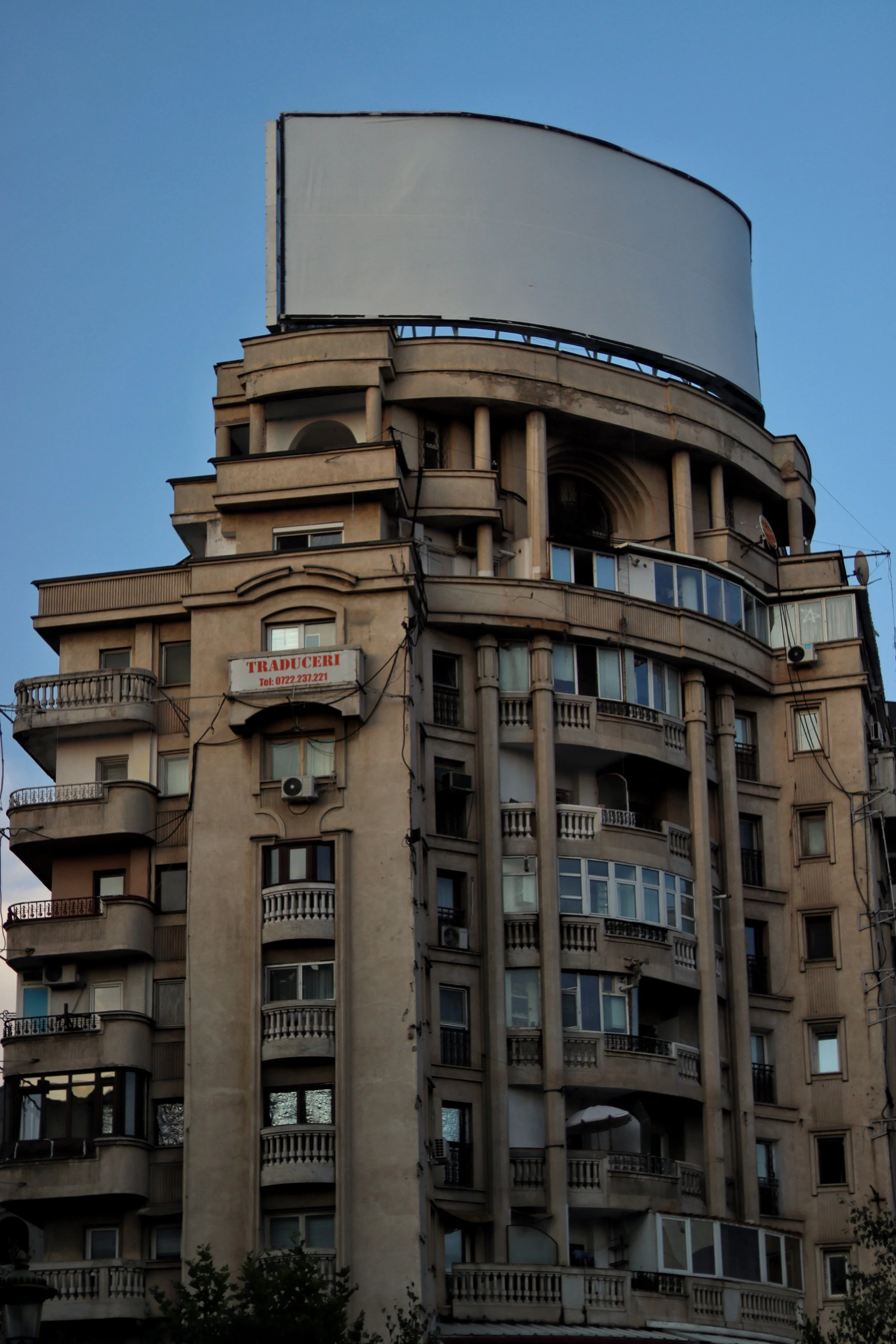
I had no real interest in visiting Bucharest. Two things were pulling me though: One, it had the heaviest building in the world (I don’t know what that means, I thought weight was irrelevant when it comes to the Earth, but hey); and two, to watch The Odyssey.
The Odyssey had just come out and I had to see it in IMAX. The only IMAX in Romania was in Bucharest; I was staying in Brasov, three hours away. So I packed an overnight bag and shlepped by train to the capital. As I jokingly put it, I took an odyssey to see The Odyssey.
The first thing I noticed in Bucharest is that it smelled. It smelled weird on the train platform, and then it smelled weird on the bus platform. It even smelled a little weird in my AirBnB, before I opened the windows.
Bucharest had a heavy energy. Maybe that’s why they made such a heavy building. It’s been called “the Paris of the East,” as they adopted a similar urban plan as Paris, with its boulevards and architecture. Yet while there, something just felt glum. Perhaps it was from the communist era that still hangs heavy, which ended not-so-long ago. But yeah, the vibe in Bucharest felt low.
My plan however was simple. I’d see the movie at 3:30pm. Before, I’d visit the heaviest building in the world — it’s their Parliament — and maybe other things.
Yet when I woke up, it was raining. Heavy rain — the type where no umbrella could keep you dry. So I never saw the heaviest building in the world.
Instead, I sat in this plush red chair in the corner of my AirBnB. It’s a beautiful chair and even more comfortable than it looks. I went to three different places to find the right strength of coffee, and then I sat and read and waited until 2pm, when the rain abated and I could walk to the cinema.
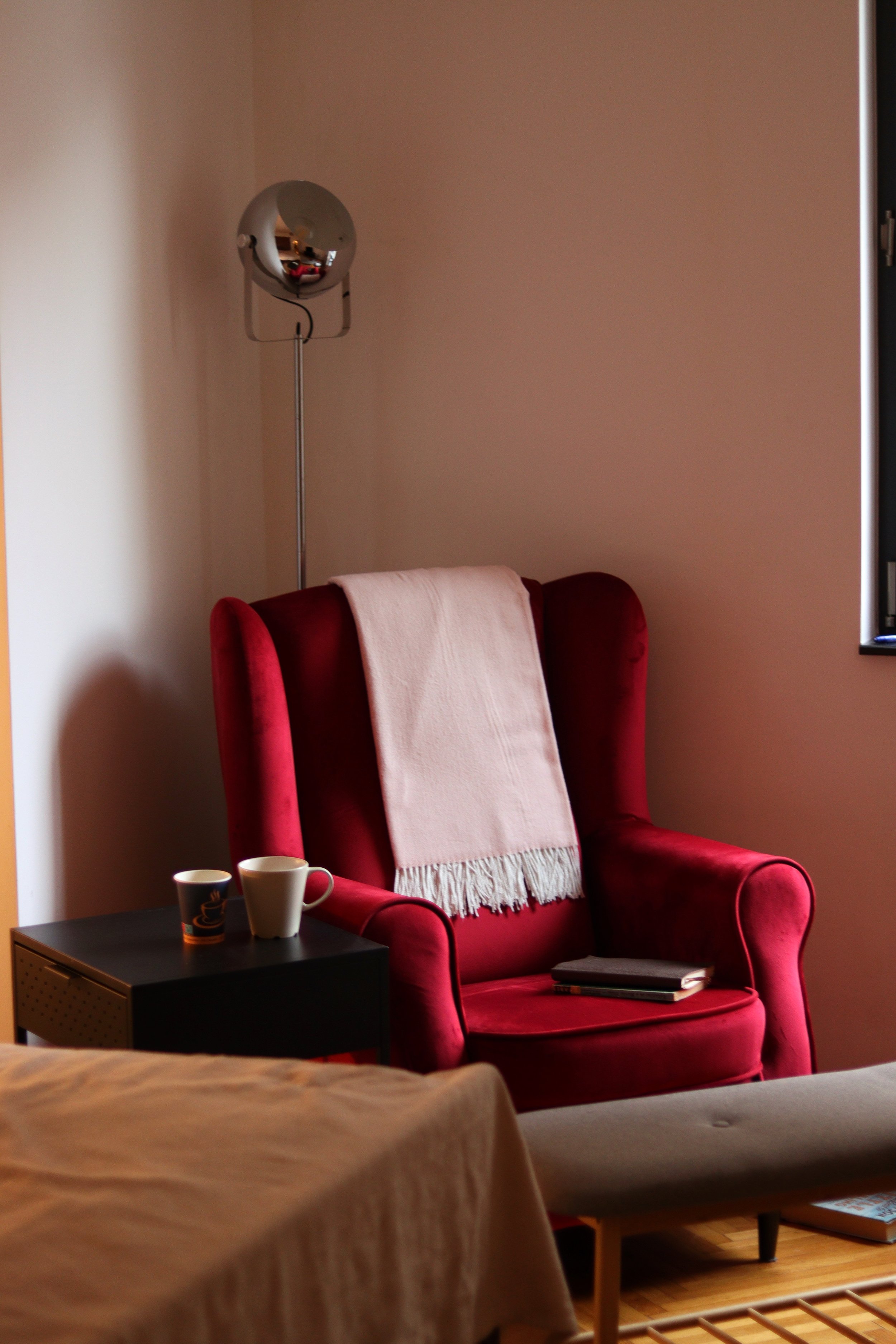
As I sat and read, I did feel some angst. I should be out there exploring, I thought. That rain though was coming down in buckets. I allowed myself to enjoy it from the inside, and it reminded me of a conversation I had a few days earlier.
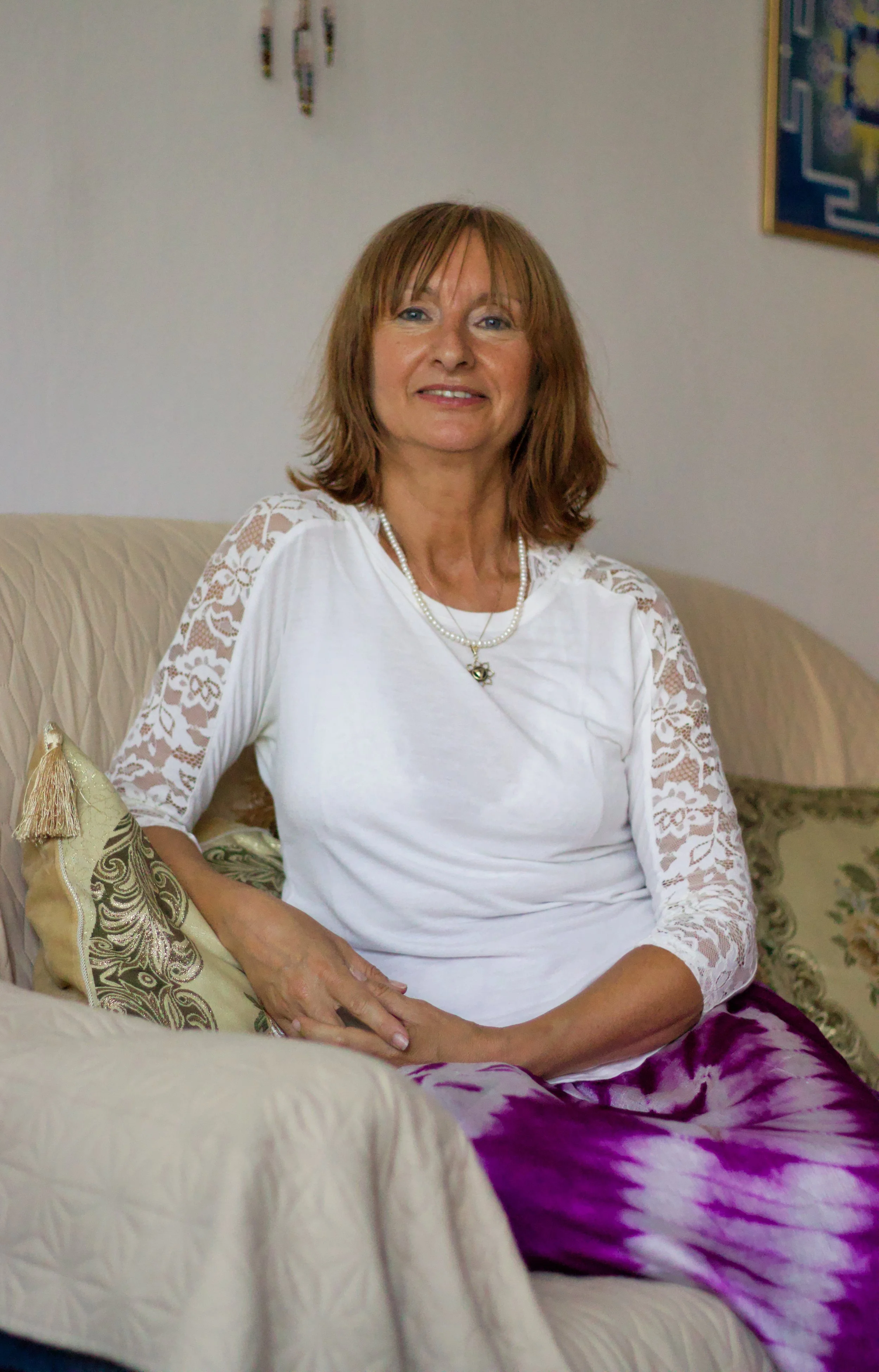
In Brasov, I met a woman named Georgiana. She’s Romanian, and slightly older than me. We met for sugar-free cake in the heart of town.
Though raised in Brasov, she’d been living in Sweden for over 30 years. That was her home, she said. She was married, and working as a coach for women, which she always loved. Yet something felt, as she put it, a little too comfortable.
“I asked the universe for a shake-up,” she said, “something to get me a little uncomfortable. Well, you know what they say. Be careful what you wish for.”
Her 30-year marriage ended. Her work essentially dried up. Without either, she had to move back to Brasov. Now she’s living in the apartment where she was raised. She’s still adjusting, she said, but she’s not loving it.
“Right now, my job is to allow,” she said. “Life is about allowing. I spent so much of my life trying to control. ‘It has to go my way. I know better.’ But I’ve seen, life goes best when you just let it happen. This is my work now,” she said, “to just let it happen.”
“And so every morning,” she continued, “I pray for the same thing: God…surprise me.”
Now, I never read The Odyssey. I just remembered a guy ran into a Cyclops and then the Sirens. So everything I say is a reaction to the movie, not the book.
That said, my God. What a spectacle. That movie was three hours long and it never lost my attention. I was engulfed by the colors, the sounds, the sets, and the adorable face of Tom Holland.
But most of all, I resonated with Odysseus.
Odysseus is the smart guy, the clever one. He relies on his mind, and always thinks his way out of everything. He sees life as something to outwit.
Later in the movie, he’s leaving Calypso’s island to go home. His body and mind have been healed, and he’s ready to return. As he’s about to set off on his little raft, Calypso says to him:
“You’re a man who needs to control his fate. But you cannot control this. You must give yourself to the storm…Give up the fight, give up control, and live. It is a leap of faith you haven’t made yet, Odysseus.”
Ugh.
Boom.
Splat.
I knew it: I rode three hours just to hear that.
When the Greeks won the war, Odysseus assumed it was all over — his work was done, now it’s just smooth sailing (literally) until he got home. What he didn’t realize was that his journey was only beginning. And I felt similar.
I’ve had a lot of upheaval in my life lately. I quit my job last year and moved out of New York. I also had a relationship that started fast and ended just as quickly. Now I’ve been on this nomadic, open-ended adventure across Europe, which I’ve half-wittedly called an odyssey.
I’ll also admit: I had this notion, this fantasy, that once I made this move — this cutting-ties of unsatisfying comforts — the seas of the universe would part, and the life that I was always meant to live would just magically unfold.
My, that has not been the case.
I’ve been traveling three and a half months, and it’s been even longer since I quit the job. I’ve since had wonderful moments, chance encounters, and glimpses of serendipity so divine that they felt surreal. I’ve also had long stretches of boredom, loneliness, sadness, and isolation.
And as I watched this movie now, I realized: Though I left some things, I never truly leapt.
Like Odysseus, I rely obsessively on my mind to think my way out of things. Even now, as I travel within this ocean of time, I’m trying to scheme into the life that I want to live. It’s a lack of trust, a need to control. I took a jump, but I’ve never taken my hands off the wheel.
Odysseus took his junky little raft and set off upon the open sea. When the storm came, he laid down helplessly as the waves crashed over him and he let the tide decide his course.
So. What do I do?
**
I’d planned on having a quiet night. It was a slow rainy day and I just went to a three-hour movie, plus ate four pounds of cheddar-powdered popcorn. But instead I got a text.
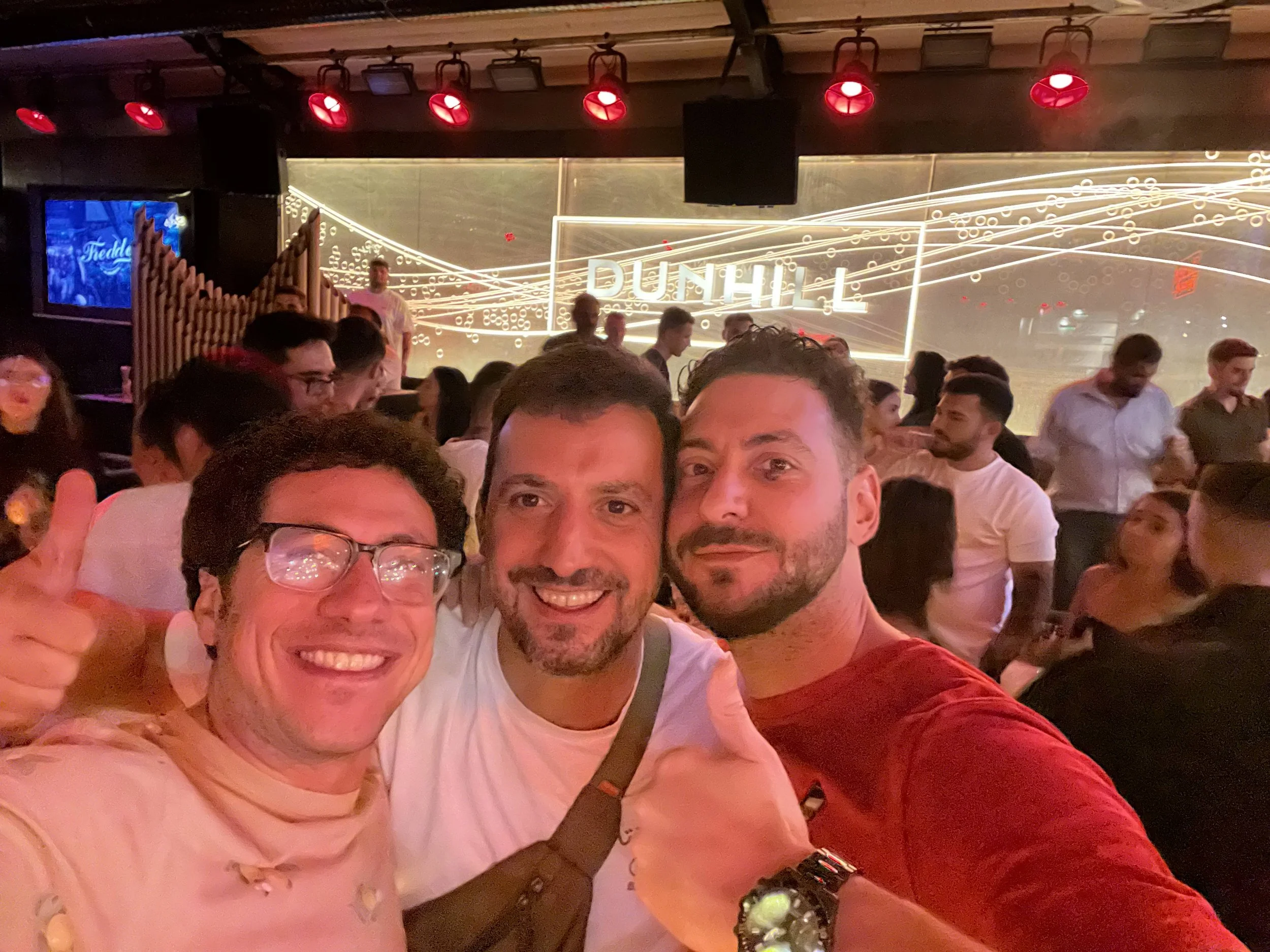
In Brasov, I met these two Spanish guys the night of the World Cup final. They’re brothers and from Madrid. One is 40, the other 34. The 40-year-old, Alberto, spoke hardly any English, which did not stop him at all from trying to communicate, while his younger brother, Eduardo, spoke pretty fluently. Together, these guys were the life of the bar, buying shots and singing chants as the rest of the place sat solemnly and quietly and watched the game.
Alberto’s text read: They just got to Bucharest, and were going home the next day. They were glad to have met me, and to hit them up when I’m in Spain.
I texted that I was in Bucharest as well, and if they wanted, we could meet.
We checked in after dinner and wildly, we were five minutes away from each other. They invited me over for a beer. Just one beer, Alberto said. It was 10pm, and they wanted to be home by midnight so they could travel without being hungover.
Those intentions, noble as they were, vanished surprisingly quickly. When I arrived, we ordered our beers, and Alberto asked for a round of shots. Ok, a digestif, I thought. Then we got another beer, and another round of shots. These shots felt five times stronger, and they tasted like gasoline.
We were getting ready to leave, and they wanted to go to another bar. And thus, we ordered one last round of shots.
I thought of my precious comfortable night in, of coming home after one quiet beer, and saw it slipping away, minute by minute.
We arrived at a very metal, very gothic bar. A European man was badly — badly — singing Californication on karaoke. Friends, if there’s one thing I enjoy, it’s bad karaoke; if there’s something I absolutely love, it’s bad karaoke with a foreign accent.
We finished our beers and I looked at my phone. It was midnight.
“Don’t you guys want to go home?” I asked.
“One more beer!” they cried.
We walked through Bucharest’s Old Town. And Christ, the creatures really do come out at night.
Guys with pock-marked faces emerged from the shadows, offering us drugs. One woman walked towards us and, without stopping, grabbed Alberto’s crotch, offering sex. We passed a strip bar and some girls invited us in. “My friend,” Eduardo said to me, “in there, they take your wallet, and then your stomach!”
We got to a club. It was loud, glittery, and filled with prostitutes and various groups of Eastern Europeans. Alberto ordered a round of tequila shots. Midnight was long gone, along with my night in.
I hung on as long as I could. I wasn’t ready for this; I met them after my solo dinner and still had my book and notebook tucked under my arm as I stood dancing by the bar.
By 1:30am, I had to go. I kept getting approached by prostitutes. The music was blaring and I was exhausted. I told the brothers goodbye. We hugged, took a picture, and promised to reunite in Madrid.
I have no idea if they made it home.
The next morning, I went to breakfast before going back to Brasov.
I sat at a cafe. I was too hungover to read my book, so I just scanned my email. I remembered an article a friend sent from weeks back. I opened it.
“Surrender as a Non-Stupid Life Strategy.”
I devoured every word.
Essentially, this guy got everything he wanted in his late 20s, but he was miserable. So he flipped his outlook: instead of acting off his plans and desires, he started saying, “I’ll do whatever God seems to want of me.”
Now, he said he looks at his life with “positive disbelief.” It isn’t close to what he could have imagined, but it’s far more rewarding.
So…how?
According to him, that means having no plan. It means sensing a current in your life and going with it, especially if it’s irrational, or if it has nothing to do with what you’d imagined before. He lives in a perpetual state of confusion, he says, not knowing what’s next but trusting it’s smarter than what he could have contrived.
Part of this, he continues, is that we have a faulty image of ourselves — we base our goals off this inaccurate reading of who we are. Thus, it’s often better to both let the world decide your way (i.e. what do people respond to), and to simultaneously follow your inner compass, which is based off what feels right, not what’s logical.
To me, that means tossing the script, wiping the slate clean, and simply doing the next step, whatever that is. And to remember, always, that control is an illusion, a surefire path to suffering and dissatisfaction.
Or in other words: Lay down on your junky little raft, close your eyes, and let the ocean do its thing.
Earlier in the movie, Odysseus was walking with Zendaya’s character, a spirit-goddess. They were talking about communicating with the Gods. Odysseus exasperatingly asked her: “The Gods speak, but how can we understand them?”
I guess, sometimes, through Substack articles.
**
After Bucharest, I texted Georgiana about the movie. “You might like it, you might not,” I said, “but there’s one part that I think will really resonate.”
She and I saw it together two days later. And right when that line hit, Georgiana leaned over and said to me: “That was it, wasn’t it?”
After the movie, we walked back to her place and talked about it.
“Leave!!” She said excitedly.
“I’m sorry?”
“That line,” she said, “that Calypso said to Odysseus. ‘Let go and leave.’”
“Ah,” I said, laughing. “Live. With your accent, I thought you said ‘leave.’”
She laughed as well. “Live, leave, yes. But that was the part I needed to hear. Letting go is the first part. But it’s those two words that make it important.”
“To let go,” she said, “is how you truly live.”