Tbilisi: Wave of Mutilation
I came to Georgia to write about Paris.
I was in Paris for two months and had a notebook full of material. I also had to leave the EU for 60 days so my visa could reset. I figured in Georgia, I’d spend my mornings writing about Paris and my afternoons doing…whatever else.
Yet when I arrived, I couldn’t write.
It was the strangest thing. In Paris, I was writing every day. I was reading great books, watching documentaries at night, roaming parks and museums. Intellectually, I was at my peak. And in Georgia, I felt completely dry.
I also couldn’t read. I bought two books in Paris, Breakfast at Tiffany’s and Reflections from Marine Venus. I sat down with my coffee in the morning and I just couldn’t do it. The books had no appeal. Instead, I went through my hosts’ shelf and picked this super cheesy novel, Pachinko (I read over 300 pages and could not give you one impactful moment).
I also couldn’t watch any movies. In Paris I’d started this marvelous documentary, Chronicle of a Summer. I was about halfway through and eager to continue. I sat down to watch in Tbilisi and couldn’t get past two minutes. I watched Veep instead.
Look. I know — I know — that every experience isn’t the same, and you can’t recreate things. I even anticipated it. I just wasn’t ready for how steep the drop-off would be.

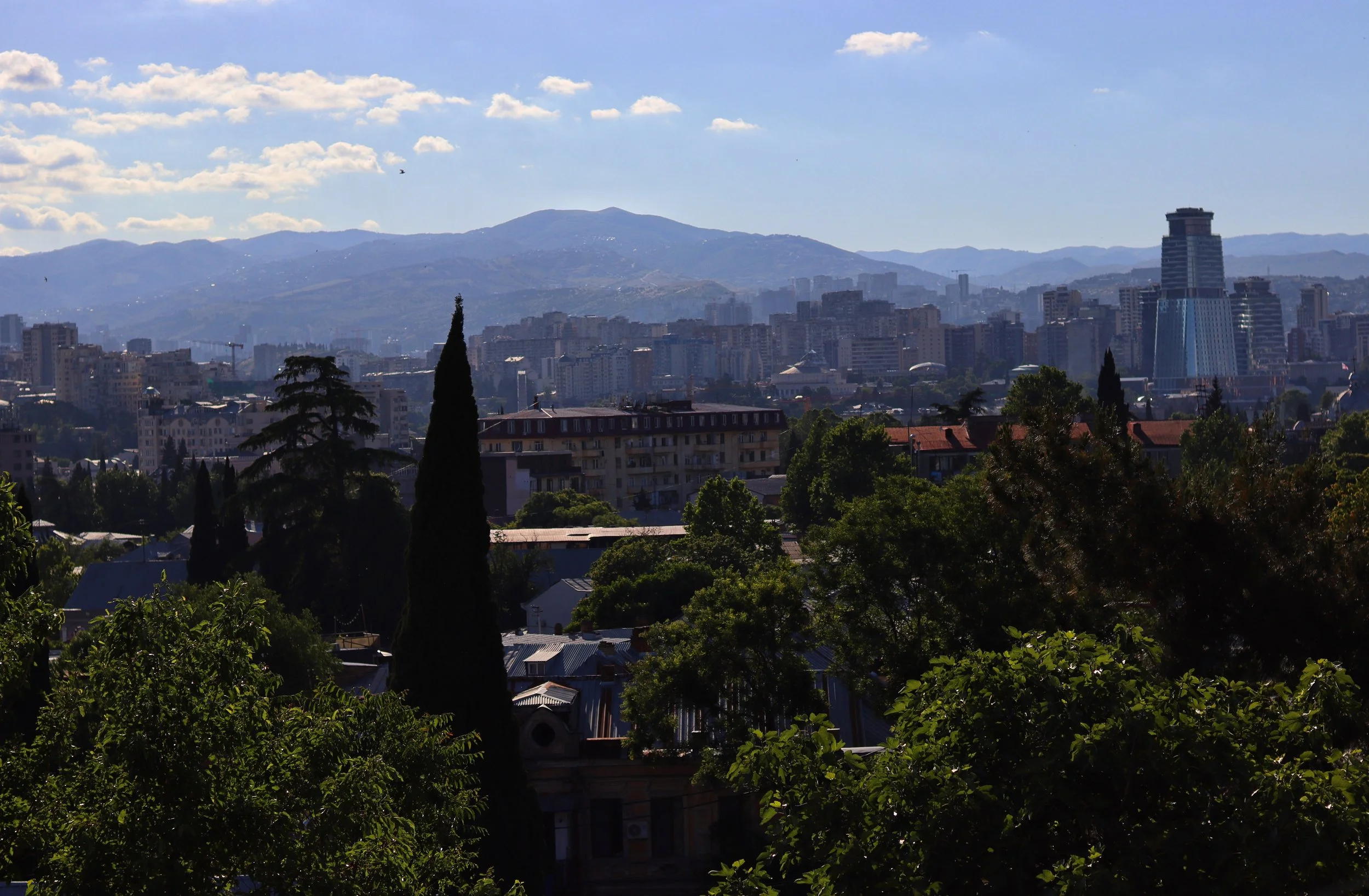
That said, Tbilisi was unexpectedly beautiful.
It’s nestled within the Caucasus mountains, so everything felt verdant. It reminded me of Medellin in that way, where nature seems to be exploding through the city: Vines crawled up apartment buildings and wrapped around balconies. Leafy trees lined the neighborhood blocks. Green ridges marked the horizon.
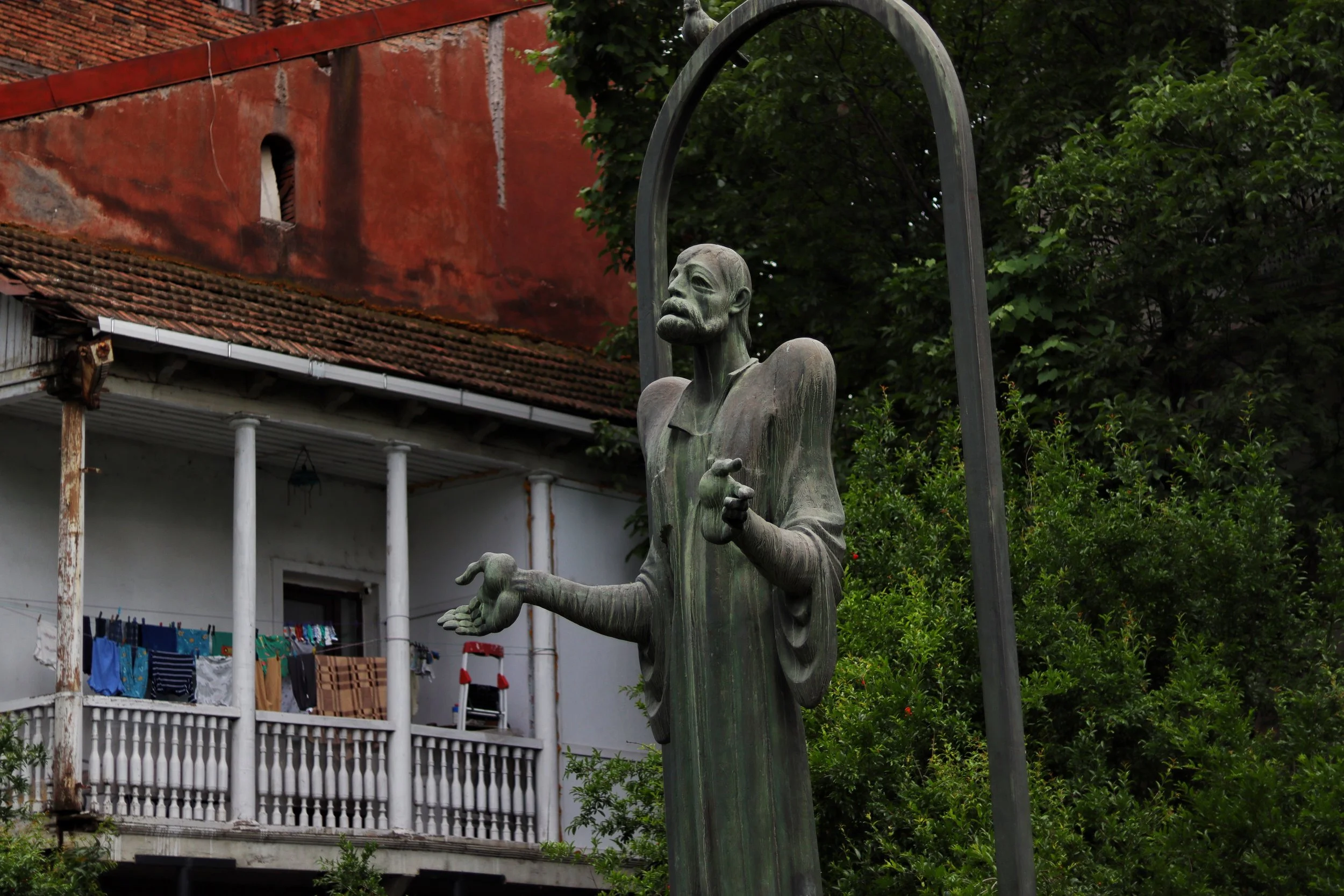
The buildings, many untouched since the Soviet era, were also quite beautiful — crumbly, is how I’d put it. Old wooden balconies wilting over sidewalks. Rusted iron pipes. Graffiti on cracked walls with exposed brick.
Bourdain called this ‘ruin porn,’ and though I tried to be mindful of that while photographing, I still found it enchanting.
The city simply felt…earthy. Everything was made of stone, brick, wood. Even the pace: Days moved slowly, as people didn’t seem to wake up until 11am. The coffeeshops opened around 9:30am, something unheard of in the States.
But I’m not an earthy guy.
When I was in Tbilisi, I felt bored. Bored to the core. More bored than I have ever been, or ever thought I would be. So bored that some days, it actually hurt.
Thing is, I wasn’t lonely — I’d met tons of people and usually had plans at least every few nights; I just wasn’t fed.
I tried many things to alleviate this. I went to coffee shops. I attended meetups. I reached out to the expat group online. But with most people, we’d have a pleasant conversation, then never see each other again.
One day, as my boredom peaked, I went to a wine bar in the late afternoon. I ordered a glass of Georgian wine, sat alone in the courtyard, then spent the next hour scribbling and scrawling in my notebook: Why am I here?
Something did lead me to Tbilisi. As in, this wasn’t completely random.
It started in Portugal. Last Christmas, I stayed for one month. On my street was a Georgian restaurant. I’d hardly heard of Georgian food. I went with a friend and she told me about her trip to Tbilisi. As she spoke, something in me lit up. I clocked it, but I didn’t feel this urgency to visit.
Then in Brooklyn, as I was moving out, I hired a TaskRabbit to help remove some shelves. Usually with TaskRabbits, they come in, do the job, and go. This guy made conversation. He asked where I was moving, and then I asked where he was from. “I am from the Republic of Georgia,” he said, with a thick accent and an almost exaggerated elegance. My friend’s Tbilisi story popped in my mind, and I asked him if he recommended it for foreigners. “In Georgia,” he said, “the guest is a gift from God.”
Well. Georgia was officially on my radar.
Towards the end of Paris, I had to leave the Schengen Zone by May 29, and I wasn’t ready to go back to the States. Georgia was the only place that pulled. I was at the cusp of booking, but started having doubts and hesitation. I asked the universe for a sign.
Five minutes later, I kid you not, I get a text from a woman I’d met the night before. She sent a picture, standing outside a Georgian restaurant.
I booked my ticket that night.
**
The trip started off hot. As I said, I found the city beautiful. I was meeting people. I had a park near my apartment. The apartment itself wasn’t desirable — it had little natural light and a ton of noise from the neighbors — but I rearranged some furniture and was making it work.
I mentioned though I couldn’t write. The Paris material just felt dead to me. I’d sit and try to transcribe it and it felt like work. Then I’d use a memory as a jumping off point..and it still felt like work. Tedious. I’m seasoned enough at doing this to know when something doesn’t want to come out, and so I put it down.
But then what?
I had nothing grounding me, no purpose. Most days looked like this: I’d wake up feeling energized and optimistic. I’d make my coffee, then start reading Pachinko. But then, nothing would happen. I’d go for walks, then end up back inside, sitting and scrolling on my couch, waiting for night to fall, waiting for the day to end, so I could hopefully recoup my losses and start the next day better. And on this cycle went.
I asked other expats what they did during the day, especially the ones who worked part-time. One said she mostly ate mushrooms and watched stuff on the internet. Another guy said he’d finish work, then walk as long as he possibly could, until he couldn’t take another step, then go home. So okay, I thought, it wasn’t just me.
Slowly, all my bad habits, the ones I’d worked so hard to ditch in Paris, came roaring back. I was using ChatGPT for therapy and advice. I was scrolling Instagram. I was reading endlessly about basketball and politics.
Then the goddamn Knicks won the goddamn championship, and I thought my FOMO was going to burst through my chest and rip me apart.
One night I went to dinner by myself. I checked my phone and saw an email: Does life feel like a rollercoaster?
It was from this Substack called The Culturist, and they were writing about a story from CS Lewis (he of “Narnia” fame). The story was called “The Screwtape Letters” and revolved around a concept called “The Law of Undulations.” In the story, a senior demon is talking with his nephew on how to lead humans to hell. He says: “Ups and downs are part of God’s design for humanity. And the low moments—the troughs—provide the best opportunity for humans to be led astray.”
Ah. Sweet relief.
It was something I’d been thinking about, and this email crystallized it. I’ll explain as best I can.
Everything happens in waves. Light moves in waves, as does sound. The economy, if you really step back, resembles a wave. Ice Ages and geological periods seem to move in waves. It all moves in a similar motion: up and down, up and down, over and over.
Life’s events feel no different.
I thought back to this exercise I do every New Years — a retrospective at the end of my year. I note all the meaningful things that happened month-by-month, from bad to great. This past time, I’d noticed that each month has one exceptional event — a peak — with many “kinda good” events before and after. Those peaks tend to happen somewhat regularly, almost like they’re following a lunar calendar.
That’s also why, for me, it feels life gets really busy, then seems to dry up, over and over. Even in a single day, I can feel emotions come and go. Clarity comes, then confusion, then clarity again.
That email though, that beautiful email, gave me clarity: I was in a trough.
Usually when I’m in a trough, I panic: I desperately look for new projects, or send errant emails, or scramble to explain why I’ve gotten myself into this mess.
That’s exactly what I did in Georgia. I thought about doing a story on wine. I drafted emails I’d send. I looked for other AirBnBs. I mulled endlessly why I was in this mess, what I’d done to lose the momentum I gained in Paris.
And true to CS Lewis’ quote, I was most susceptible to temptation.
With my spirit dry, my physical urges emerged with full force. I found myself lusting for attention from women — just a look or a smile, anything. After two months largely offline, I was back to scrolling on social media. I was getting massages nearly every week, just to have physical touch.
I felt these desires so acutely, yet I was doing nothing to fulfill them. And so on they went — persistent, screaming, and unsatisfied.
Maya Angelou said, “When someone tells you who they are, believe them.” I feel the same goes for places.
I went to the Tbilisi Zoo on one of my last days. My, what a sad place. As soon as I walked in, a Transformers-themed train rolled slowly past me, the type you see in shopping malls, with bleached paint and techno music playing from its busted speakers, driven by a horribly grumpy-looking man. The zoo was wedged between two highways, so you saw trucks passing behind the pretty zebras. The animals’ windows were smudgy. The ferris wheel was rusty and creaky, spinning eerily with no one on it. There was an unmanned, inoperable ride called “Virtual Reality, 9D” (can someone explain dimensions five through eight please?).
I had been in Tbilisi for over a month now. I thought back to when I first arrived. On my second night, I went to a comedy event for expats. I remembered looking around, seeing many nice and pleasant people, but feeling that something was off. Not wrong, just off. I felt it then: “This doesn’t feel like my place.”
After the show I was talking with a girl. She was from Kazakhstan originally. I told her I’d just arrived, it was my second day. She started laughing. “Do you feel scammed?” she asked.
“What do you mean?”
“There is nothing to do here,” she said. “Just hikes and beers.”
Granted, that didn’t sound like nothing to me, but I heard what she meant, and only now did I fully understand it: Tbilisi seems best enjoyed as a base camp for the rest of Georgia. Hikes, waterfalls, horses, etc., then Tbilisi as a break.
You know, earth stuff.
I can’t help but look at my trip and feel I did it wrong, so horribly wrong. I whittled the time away as a country full of natural wonders beckoned before me.
But I didn’t feel regret. In my eyes, you can’t regret something you never consciously chose against. Meaning, if you didn’t know better at the time, then what exactly are you regretting? Regret to me is felt instantaneously; it’s when you knew what to do, or what you wanted to do, and yet you did something else anyways, usually out of fear. The opposite is merely wisdom — being clear on something only after the fact. It might come with grief, but I couldn’t have done it any differently.
**
In Georgia I felt my lowest. It hurt in the moment, but only now, at the end of it, I can see how low I actually was.
Boredom is my hell. And I was burning.
I don’t regret coming here one bit, because I felt the call intuitively and I follow that vigorously. But I do see the lesson, in part, that life had meant to give.
The Law of Undulations brought me great relief. It didn’t cure the pain, but it gave me perspective, like being handed a map.
In Georgia, I was in a trough. And if Georgia was a trough, then Paris was my peak.
In Paris, I was shown what it means to be completely fulfilled: I was reading enriching books, writing consistently, learning French, and meeting people that delighted me to no end. It was an intellectual city built on culture and books. I learned, this is the type of environment I need to be satisfied.
And in Georgia, I was shown its counterpart: I was in a dark apartment in a back alley with loud neighbors and stagnant energy. I stayed on a commercial street that someone ingeniously described as “living in an airport.” I’m not saying Georgia was bad, not at all — I’d recommend Tbilisi heartily to most; I’m saying that for me, it was simply a mismatch.
It felt cruel at the time, and quite wretched, but now I see how incredibly potent the experience was, a true exercise in contrast:
I learned what I love because I saw what it meant to starve.