Morocco, Pt 4: Essaouira & Rabat
Note: The Moroccan posts must be read sequentially. If you’re just arriving, click here for Part 1.
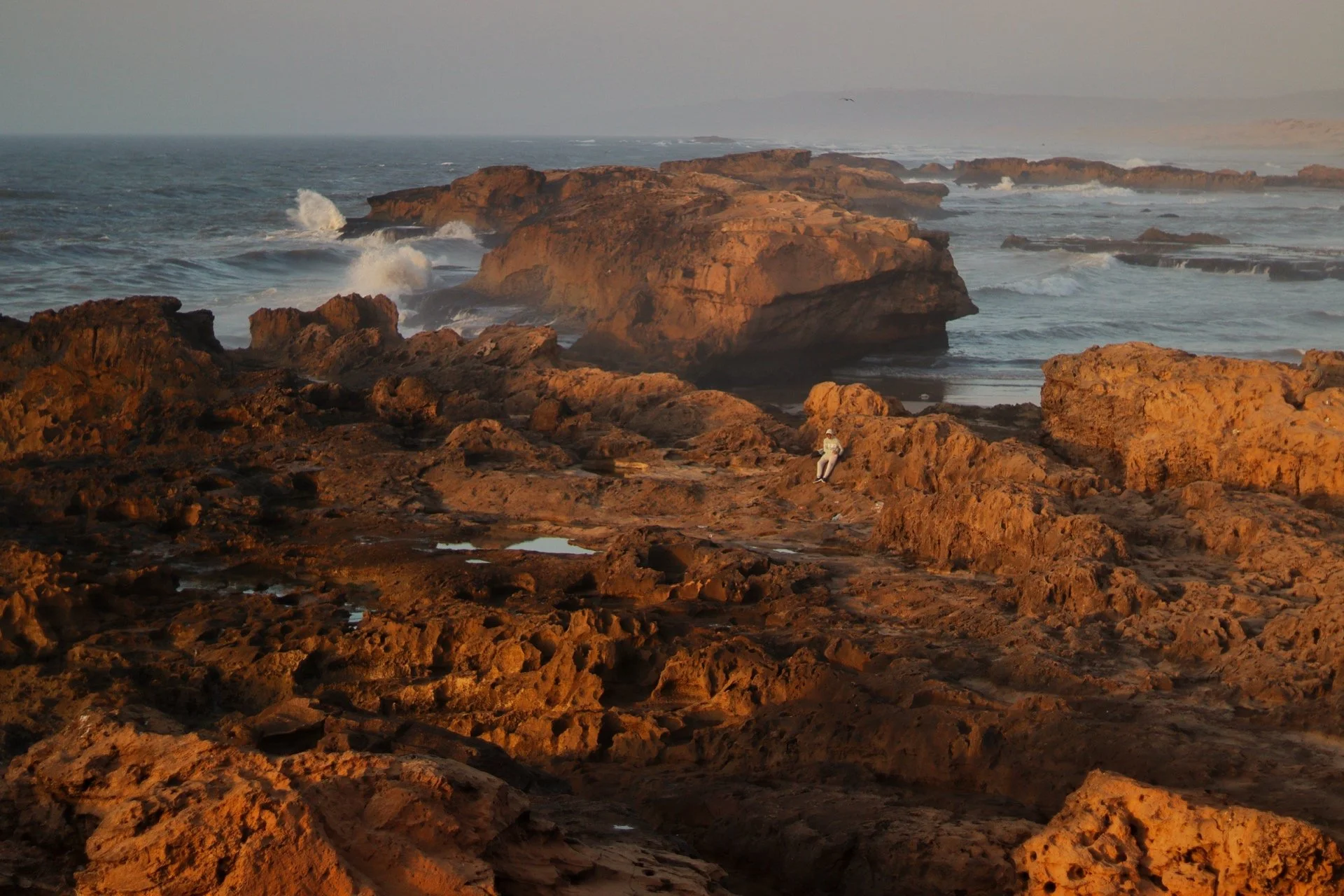
ESSAOUIRA
Marrakech was a blur. Now I’m in the wonderfully calm, coastal town of Essaouira, and boy do the vibes differ.
I don’t know if people beg or scam here, maybe they do. But the feel is relaxed. As I got off the bus, the sky was clear blue, the air a chilly 70 degrees. I could hear the seagulls and smell the ocean. The medina had old shops and homes, everything painted white with blue trim and shutters. It was a fishing village, and it had character.
But most of all, I just felt at ease. It was my first time in this entire month where it just felt good to walk around, where it felt great to simply be.
My first night was magical. I enjoyed a wonderful and glorious sunset. I ate a fresh fish tagine. Right after dinner, all the musicians started coming out to perform that night — they were wearing qamis and off to play Gnawa, the soul music of Morocco (Essaouira is a hub for it).
During dinner, I randomly texted some other travelers I met while in Merzouga, an Italian couple. It turns out they were eating dinner 800 feet down the road. We met up after and they asked if I wanted to go to a bar. Since alcohol is largely banned here, I enthusiastically said yes (I hadn’t had a sip of alcohol my entire month). They led me down an alley to an unmarked doorway, where a large Moroccan man sat on-guard at the entrance. We walked in and it felt like the 1950s. Smoke filled the air, live music shook the walls, servers wore vests and ties as you heard the clanking of bottled beer and small glasses of wine and whiskey. The people were all men, all hammered.
To our delight, they served tiny bowls of complimentary lentils with our beers. “Haaaarrrriiiis,” my friend said in her heavy Italian accent, “don’t forget to eat your len-teels!” That beer, like I said, was my first in over three weeks. And after three straight weeks of stomach aches, scams, hellish bus rides, and constant diarrhea, that sip of beer never tasted so marvelously fucking good.
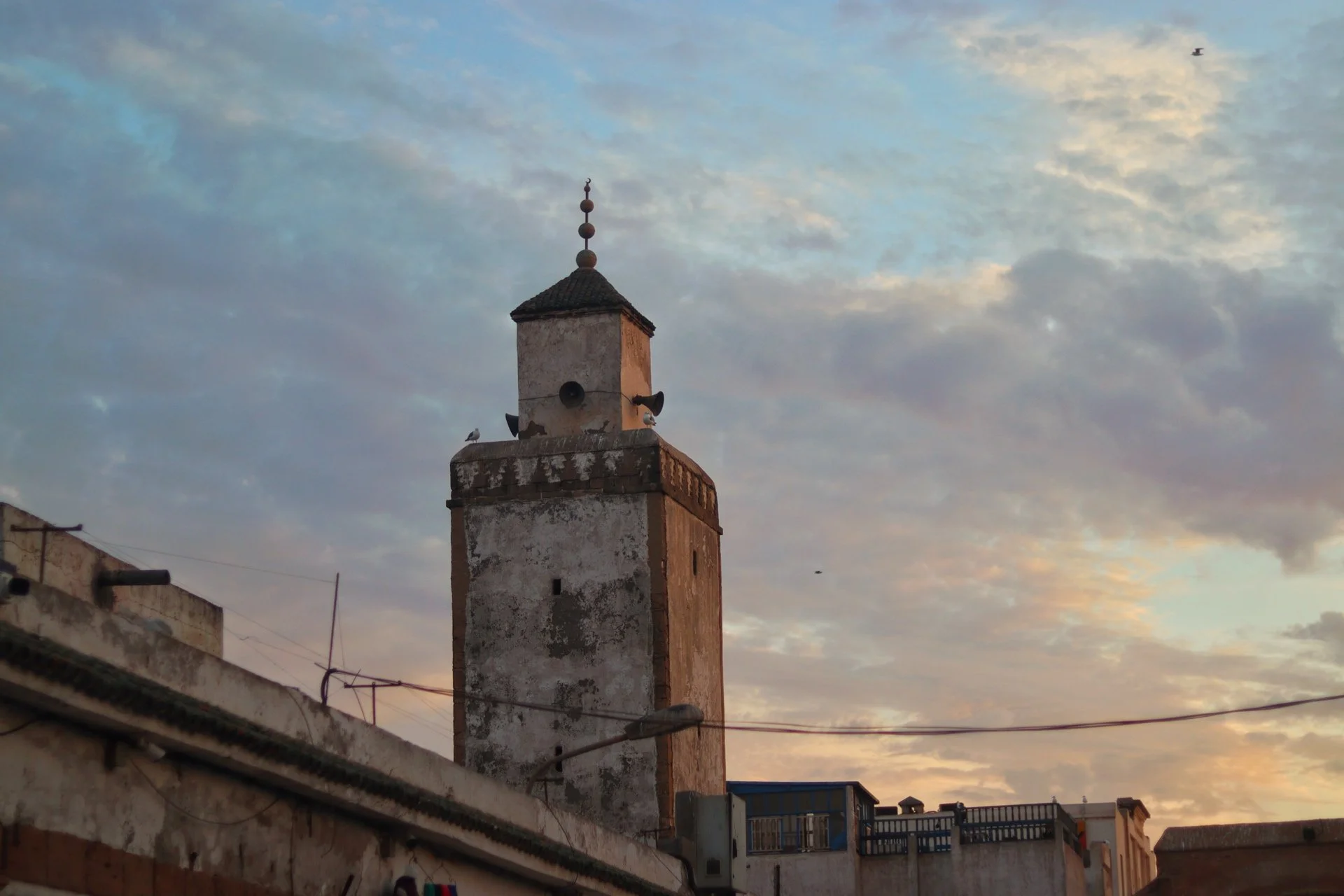
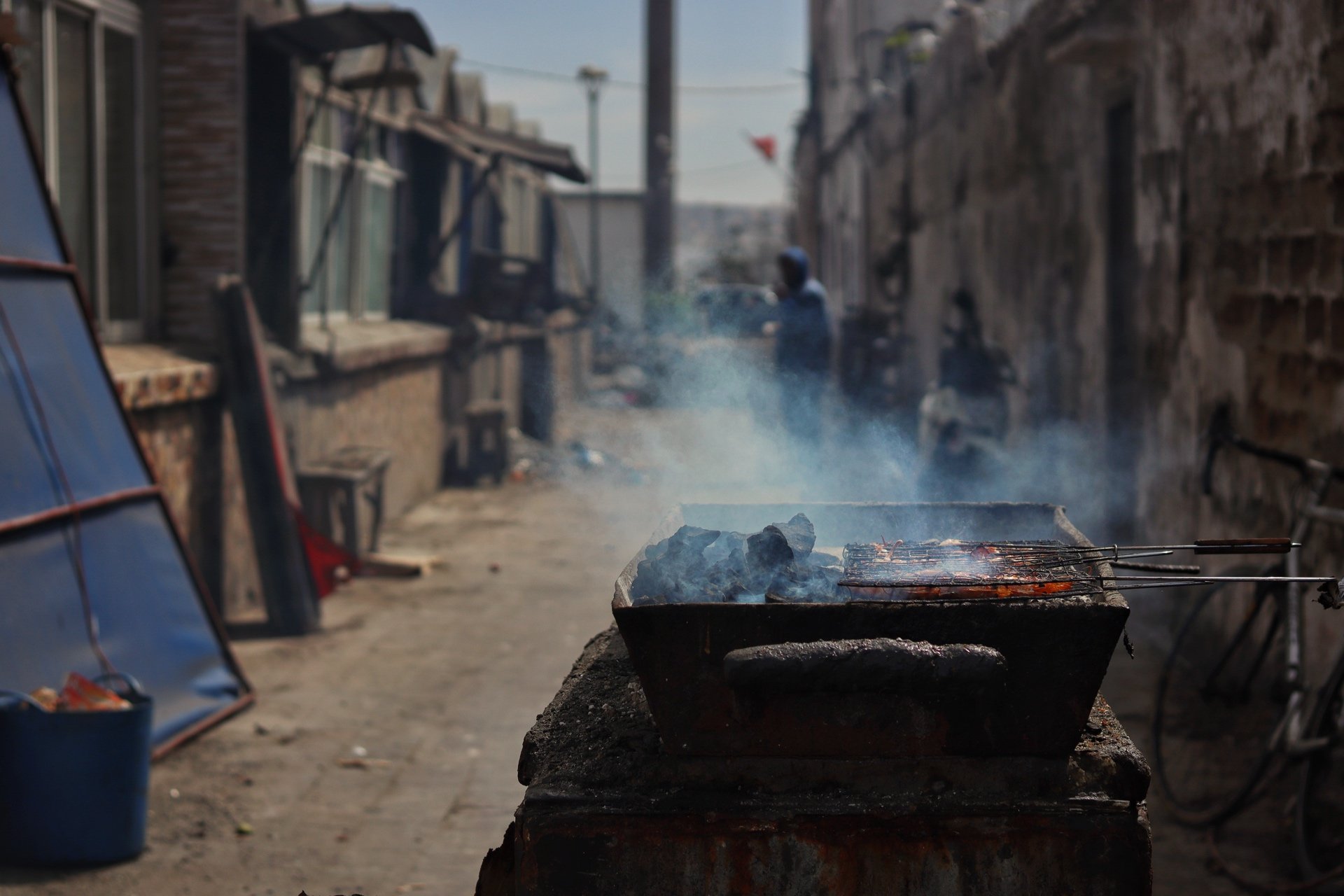
That next morning, I went to a coffee shop to read and write. I ended up at Cafe L’Esprit, Cafe of the Spirit. I grabbed a seat at an open window that looked out onto a small alleyway. The cafe had a bunch of books, so I went to look.
“Are you looking for French or English?” a woman asked.
“English,” I said. Based off her demeanor, I took her to be the owner.
“Usually this section is all French, then English there,” she said, pointing. “But the books…they always get messed up. They’re all over the place.”
“They have a life of their own,” I said.
“Yes, and you cannot control it. The book will find you,” she said. “The right book will always find you.”
I sat down and started writing. Essaouira is far more peaceful than any other city I’ve been here — the type of place that, as one author put it, “you can do less than you thought possible, where time bends around you.”
I’m here for six days, and even despite things feeling so wonderful, that hasn’t my mindset at all. I have the mentality that I’m “working,” that I need to be out there getting material, all that stuff. But what if that woman’s advice about books applies just as much to life? You cannot control it, the material will find you.
In the order of the slowness of time.
If you don’t get this, you will fail.
Maybe that’s why I’ve been irritable this whole trip. I’ve been trying to control the experience. What does it take to see how futile this is?
Morocco, if anything, has shown me it cannot be controlled. It works on its schedule, its own timeline. It’s a vastly different culture that seems to operate on different rhythms and expectations than my own. Very little seems within my control: what’s served, when things happen, or how money changes hands. It’s the essential question I face every time I travel: how quickly can I give up control and let the trip happen?
This isn’t just true with Morocco, though. This is true of all of life.
If you want to understand this, Eric’s voice said, study a rock.
As I sat and wrote, I thought again about teaching. I always felt I’d teach again, but I needed to go into marketing. I needed to work for Nike, for Fanatics, and get close to those super cool business things, like interviewing athletes or attending photoshoots or doing presentations for executives. And while those experiences were deeply thrilling, and the lure of prestige so tantalizing, I can only see in hindsight that they were never really for me.
I mentioned my Mom and Dad earlier, in Chefchaouen — that he’s the business side and she’s the more relational side. With these marketing jobs, I felt I needed to prove myself to my Dad, to his side of the family, to the people in life who respect status and income and cool photoshoots. I needed to be able to contribute to that conversation at the dinner table.
But really, now that I look back, I was just proving all of this to myself. This wasn’t about being dishonest with myself, or making wrong choices, or going down the wrong path; it was about satisfying this part of me that needed to feel achieved. And now that I checked that box, all these years later, I was finally ready to close that chapter of the book and move on.
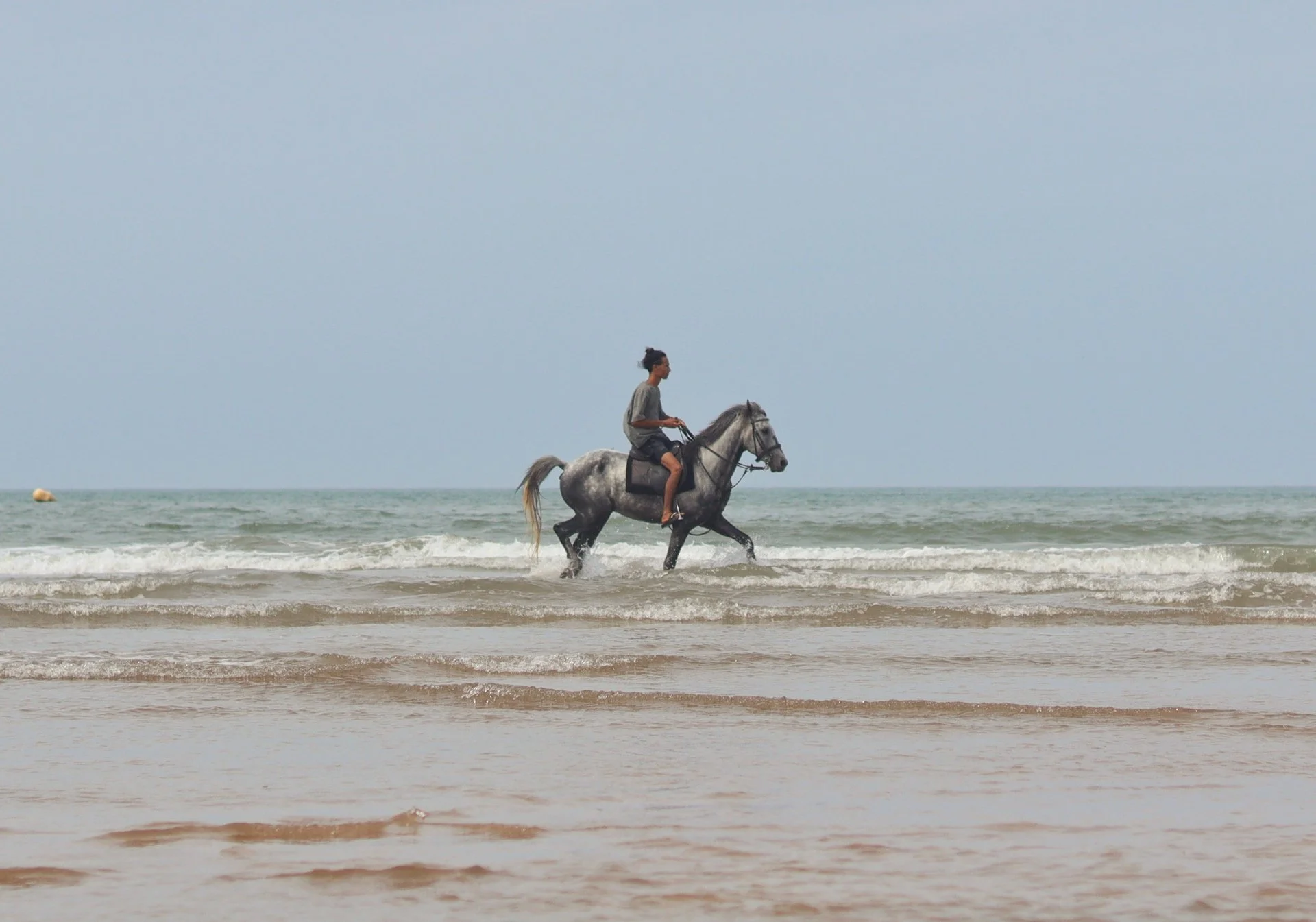
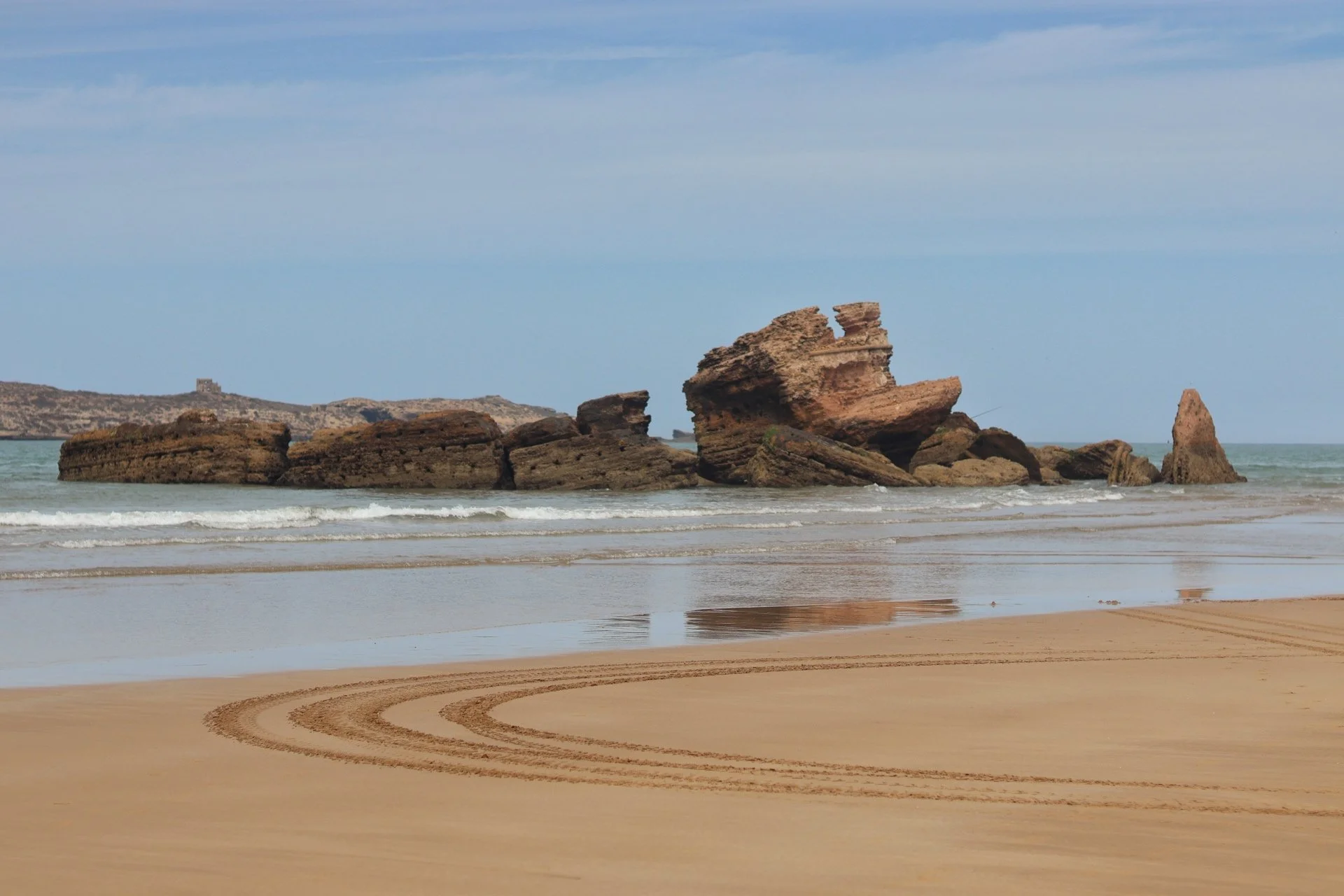
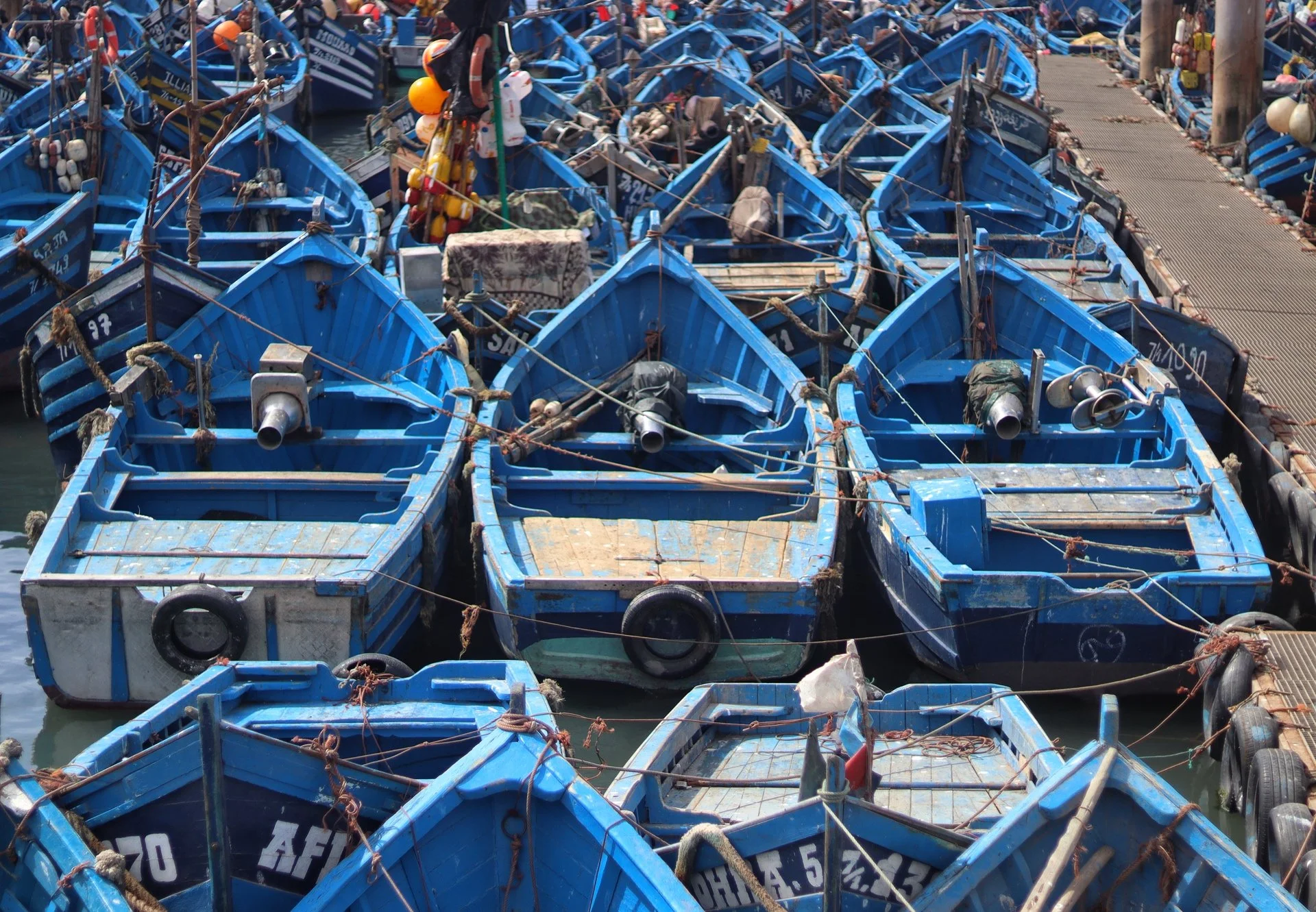
I spent the rest of my time in Essaouira in bliss.
I rented a motorbike and drove to little beaches nearby. I watched the sunset every night. I serendipitously bumped into Dianne and Salem, and we enjoyed a marvelous lunch together.
I felt no rush, no angst. My lesson was clear, my work felt done, and now I just relaxed into the rhythms of Morocco. I was still eager to leave, but I was finally done asking it to be something it wasn’t.
I came to Morocco seeking stimulation. I heard it can be a challenging place to visit, and I remember how enthusiastically I leaned into that. Well, beware of your intentions, because the universe will deliver.
Morocco has been difficult. I did not expect a joyride. But I do believe that travel, especially when you do it for the soul and not the ego, will vary in experience: ecstasy, pain, hardship, boredom, loneliness, love. In that way though, it’s medicine, the exact thing your soul needs.
Something like travel may amplify a feeling, an experience, a lesson. And for me, I clearly had mine.
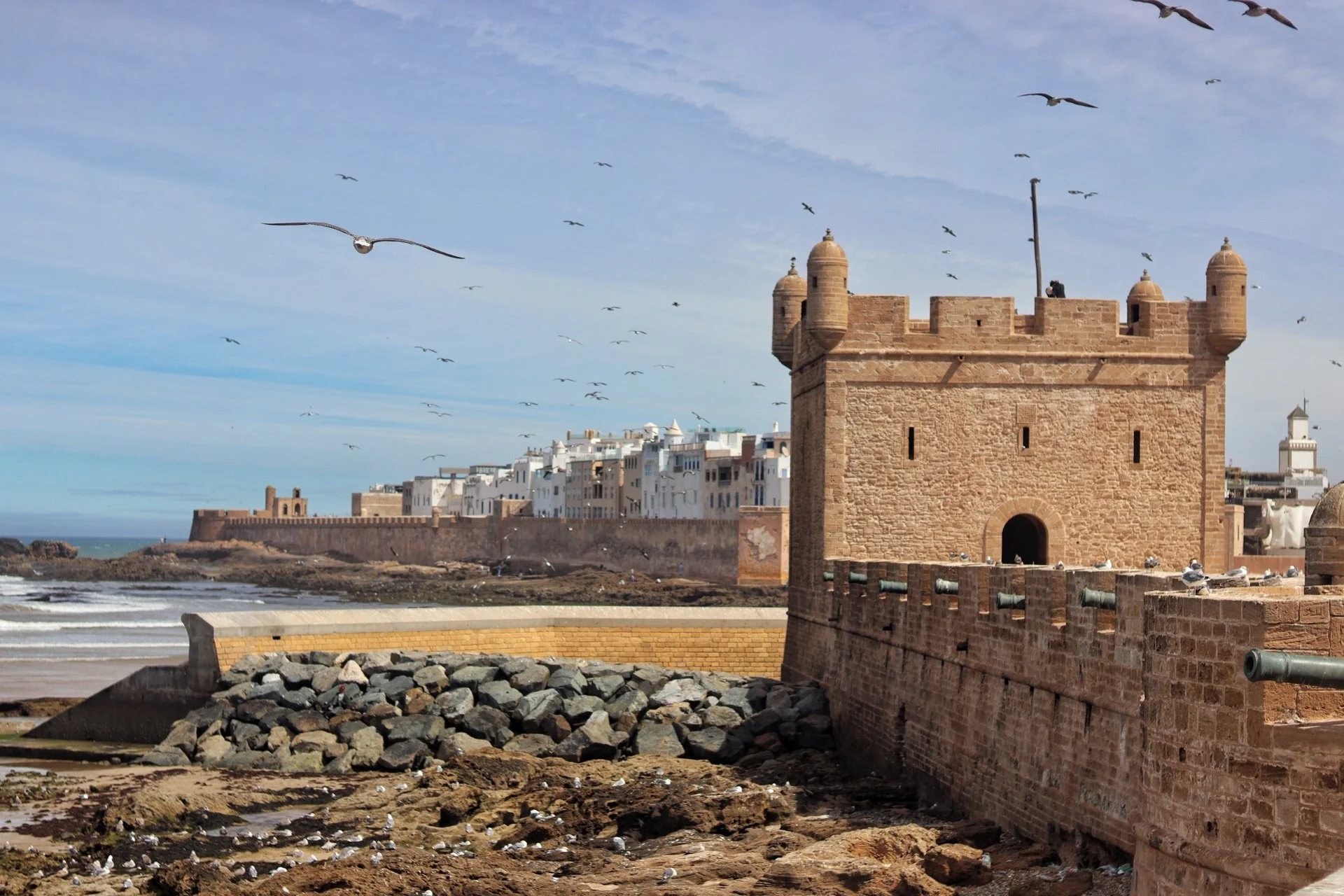
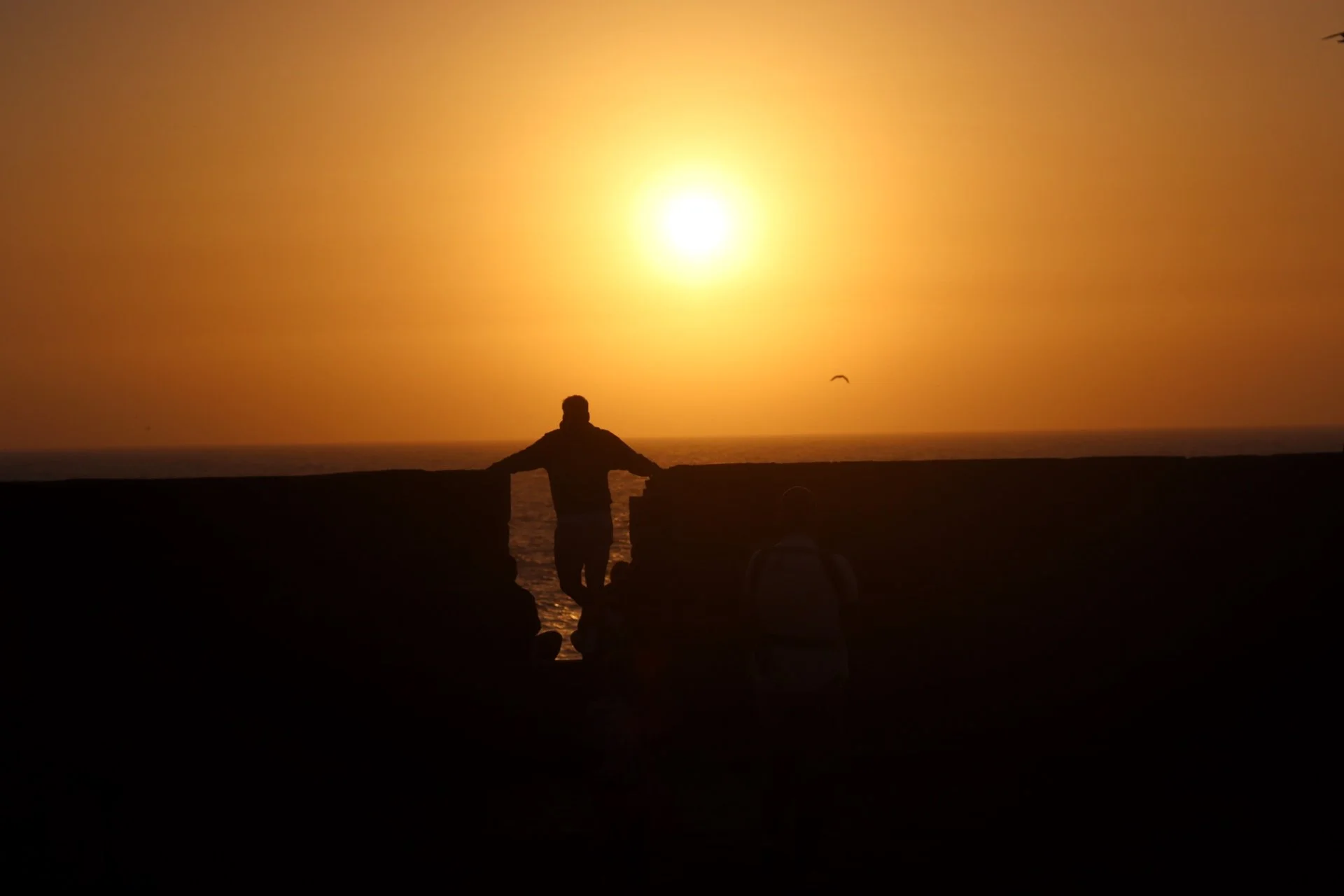
One of my last nights, I was standing at the ramparts — the coastal walkway where old cannons faced the ocean. It was about the time of sunset. The sky was orange and purple and blue. Seagulls were flocking, waves were crashing. The air felt cool.
Everything, and I mean everything, was where it needed to be. I was at peace with life, with myself, with everything that came before and everything that was to be.
Life moves at a pace that’s far, far slower than we are conditioned to perceive. There are even times when it feels like nothing is happening at all. But always, without question, it is progressing forward, moving you to a fuller, more honest version of yourself. And the better you’re aligned with that, the more you can trust it — even when you can’t fully see or feel that it’s happening — the happier you will be.
All of it will happen. Everything you need, everything you dream. Natural processes are always in play, at all times.
All in the order of the slowness of time.
**
“I don’t offer old smooth prizes, but rough new prizes. These are the days that must happen to you.”
-Walt Whitman
***
EPILOGUE
RABAT
Rabat is raging.
It’s my last stop of the trip. Three more nights and then I’m off to France. I was warned about coming, though: Right now, protests are flaring and they’re getting violent.
Morocco is hosting the World Cup in 2030, along with Spain and Portugal. Soccer, as you can imagine, is like a religion here. And true to their Gods, the Moroccan government is erecting giant stadiums to host the World Cup. This is understandable, many countries do this. The people, however, feel slighted, cheated: How dare you, the message seems to be, build these giant sanctuaries while the people are suffering? Why not spend that money on education, healthcare, food systems, etc?
One night I was visiting a small photography museum. It was set up within a very old fortress along the coast. It featured all Moroccan photographers and was quite splendid.
I was the last to leave and the gate was locked. A young man, the security guard, came to unlatch and let me out. He told me to be careful in Rabat, on account of the protests. I asked him if he could tell me what was happening. He sighed.
“How much do you think I make in one month?”
Oh God, I thought. I threw out a number to be kind. “$2000?”
“$300,” he said. “And I work six days a week, twelve hours a day. That’s why we’re protesting.”
It’s one thing to hear that as a statistic — it’s another when a human being says it to your face.
*
I thought I wanted the “real Morocco,” and this is what I encountered: low wages, gorgeous landscapes, frustrations with their government, warm smiles.
I’m a tourist. I’m a foreigner. I can’t escape it, no matter how hard I try, and here, that divide feels only more pronounced.
It’s not that I wanted “authentic Morocco,” I just wanted real conversations, and you don’t usually meet those people in Fes or on AirBnB tours. I was just feeling helpless, and unsatisfied, because I didn’t know how to get that nourishment, or where to go.
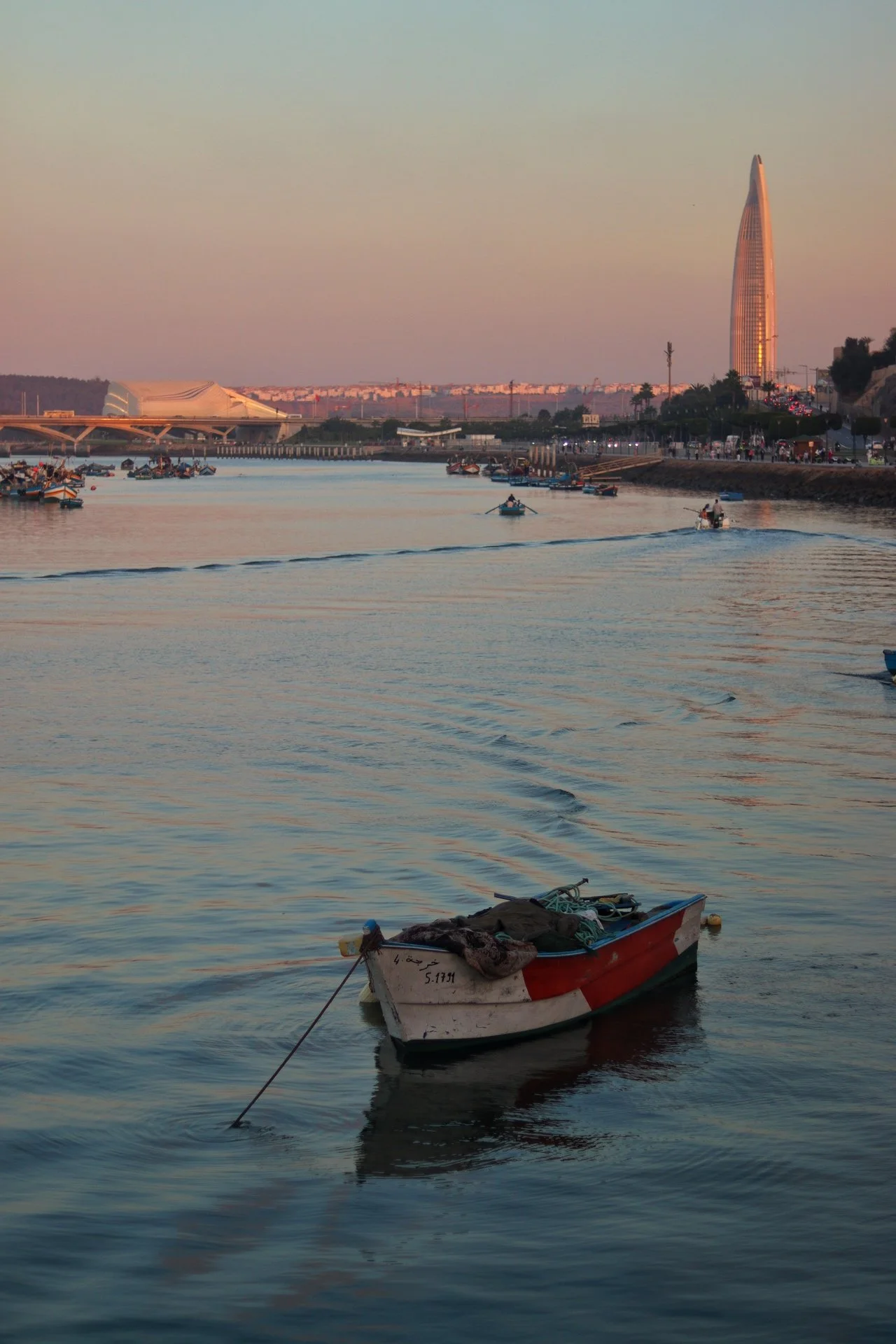
I’m drinking a beer right now on a parked boat. It’s all white tourists being served by Moroccan servers. We’ve got white tablecloths and we’re sitting under Edison lightbulbs. One table looks like they just finished a round of golf. Across the river, I see four people sitting on white plastic chairs watching the sunset from the riverbank. This dichotomy sucks, and what sucks even more is that I’m a part of it. But what can you do? Just stay at home?
Instead, I channel the feeling into gratitude. I’m grateful for where I am. This is how life is, and it’s tough. Difficult. But everyone’s got it in their own way.
I think about the security guard from before. I can feel for having bad schools, healthcare, etc — but the thing that rots my soul is to live without hope.
Again, what can you do? It seems to be the realities of a complicated and often unjust world. So no, I don’t take pity. No one asked for it and I’d be worse off if I gave it. Instead, I just take note for what I’m grateful for, for the things I do have, knowing other people and places also have things I don’t, yet in different ways. The great balance.
I won’t stare rosily. I feel a little more sobered to the world now than when I arrived. And like every trip, it helps me better understand life back home. That’s all travel is, right? A chance to better know ourselves, while eating and seeing pretty things along the way.
Across this river, people are fighting for their rights. Across this ocean, they are too. I sit here with my beer, looking at a sleepy harbor, just grateful to be here. Happy to be alive, happy for all I’ve been given, uttering a prayer under my breath: that everything I have is more than enough to be satisfied, and ecstatically so.
Baraka.
A lot of people go into a trip like this.
I don’t mean to talk about it like a movie production. What I mean is, the towns I visit are largely due to the recommendations or invitations from others. I like to be guided.
For this trip, that main guide was Kasia.
Kasia and I met virtually via my Facebook post in the Moroccan expat group. She reached out with a very sweet message, that she’d read my blog and wanted to be of help in any way. She’s German and has lived in Rabat with her Moroccan husband for over three years, plus their six kids. They used to run tours, so they know the country quite well. We got to talking and soon, she created this itinerary for me. I followed it to the bone, and told her if I make it to Rabat, I’d love to meet.
Fittingly, she was available the very last day of my trip. She invited me to her house. I sat outside and drank tea with her, her husband, her extremely precocious 15-year-old son, and a bevy of other children and pets and friends.
We recapped my trip. I told them all about the highs and lows. I also was very frank with her about the desert, as she was the one who helped arrange my accommodation with Nabil. I shared how I felt he treated me, and what I’d recommend for future travelers. Kasia was so kind and receptive. We talked about Morocco, about Germany, about international politics, about everything.
Soon her husband came out, Sammy. He’s a very sweet Moroccan man who spends much of his time in the US for business. He started asking about my trip too, and I told him the truth: it was beautiful, but difficult.
“When people come to Morocco, I tell them to do ten days. Two weeks, maximum,” he said. “Scan the country, hit many cities, then find the spot you love and want to come back to.”
“And most importantly, get a Moroccan guide,” he added. “Most will do it for a low fee. Or, just go into an online group and see if anyone is interested in coming with you as a language exchange. You’ll find tons of people who are up for it.”
“Without a guide,” he said, “it’s almost impossible to experience the real Morocco.”
Great, I told him. I’ll pass that along.