Morocco, Pt 2: Fes, Merzouga
Note: The Moroccan posts must be read sequentially. If you’re just arriving, click here for Part 1.
FES
Fes is pushing my buttons.
I arrived thinking this would be my spot. Those first few cities I’d considered “warm-ups.” Fes, I always thought, is when things would really kick off, when the real trip would begin.
I had a lot riding on Fes. My original plan was to stay for a month. Fes, after all, is referred to as “the spiritual home of Morocco.” It’s one of its oldest cities (it was originally the capital, also the home of the world’s oldest university), and other travelers spoke very highly of their experiences. I changed my stay from one month to ten days until something told me to shorten it to five. And thank God I did.
I had high hopes. I’m reading a book called “A House in Fez.” It’s about an Australian woman who moved here and, despite the challenges, was loving it. But her story just seemed a world apart from what I was experiencing.
My first impression wasn’t great. I walked out of my very old, very disappointing guesthouse for an evening stroll. The room had a mold on the walls from the AC, broken soap dispensers in the bathroom, and a rock hard bed.
I turned the corner from my guesthouse and the first thing I saw was a wall of fuzzy hats. It hit me like a gut punch. Handbags, postcards, turnstiles of tourist junk. One shop after another, over and over. It looked no different than any medina in the previous three cities. Men called out to ask where I was from. Tourists walked and gawked and packed the narrow alleyways, causing standstills. I felt heavy, sinking, trapped, like I was on this circuit, and no matter where I went, I’d never escape it. This is it, I thought. This is all it’s gonna be.
***
The big difference between me and the Australian woman was that she was coming to live here. So the Fes she was experiencing was in another neighborhood, another world. I was staying smack dab in the Medina, the tourist trap.
I’ve used the word “tourist trap” quite liberally in the past. Never, though, have I experienced it so literally.
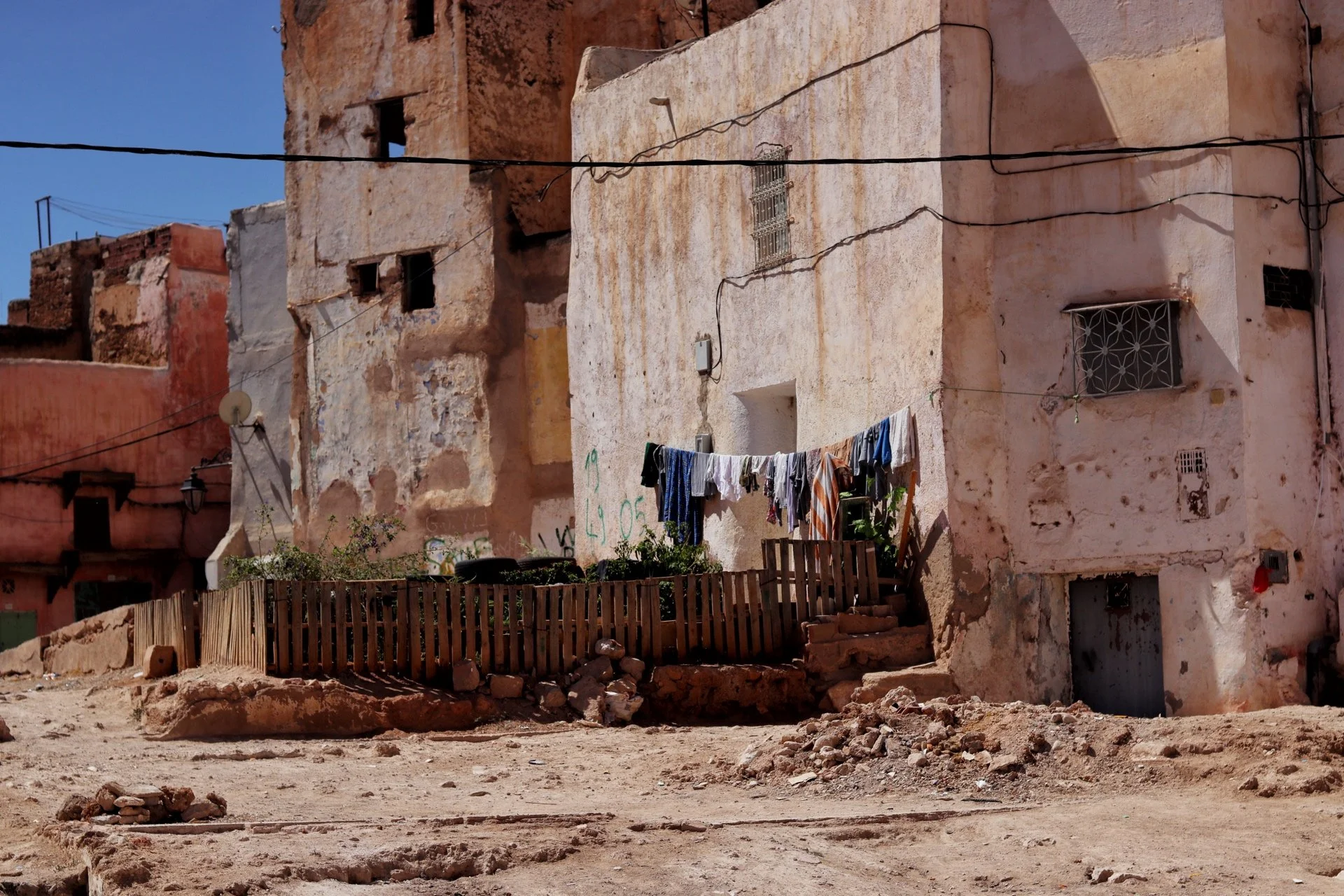
Every city in Morocco, I’m learning, has a medina — and many of them function the same. It’s an endless maze of narrow alleys and dark corners. The Medina was once the pillar of a city, along with the mosque. It still is vital, except now it seems to cater almost entirely to tourists. Phones and GPS notoriously glitch out and work sporadically—and the Moroccans who work here seem to know this. So when they see an unsuspecting white man like myself looking hopelessly at his phone, they pounce.
My second night I got pretty lonely. I made a plan: I saw a “donut shop” on Google Maps and thought I’d grab one before dinner, then explore more of the medina. I set off. My route however led me to a wall. No door, no sign. The map said it was open until 8pm — I didn’t even see a storefront, let alone their hours. But hey, that’s fine. It’s still golden hour; I’ll just wander until dinner.
My only goal was to escape the madness. I wanted to stroll through a typical neighborhood, experience some peace, and watch people go about their business. In other words, I wanted to be invisible. I finally hit a quieter corner of the Medina. A group of kids were playing soccer in an alley. I’m walking towards them when a voice calls out to me. “That way is closed!” he yelled. I look back, it’s a young kid, a teenager. “You can’t go that way,” he told me. “I can show you back.” I was grateful.
As I said, I was lonely. It felt good to have that company, if only for a little. I asked his name, his age, what he likes to do. I was also so desperate to speak to an actual Moroccan person, one who didn’t work at my guesthouse or a restaurant. He was sweet, no more than 16. As we talked, I was really trying to parse if this was a scam—I thought I could tell by the eyes; his looked innocent, genuine, and I sensed this was just an act of kindness. I relaxed. Eventually we got back to the main street, and his demeanor changed. He suddenly looked older, colder. “I think you give me something for my help,” he said, his tone flat. I was bummed, but I got it. I pulled out a 20 dirham note ($2). “That’s not enough,” he said back.
I walked to my restaurant. My GPS of course wasn’t working, so I was going off memory. Every few feet I’d hear, “English? You speak English? My friend, where you from? My friend, do you hear me? Why do you not speak to me?” It wasn’t just someone calling out, it’s two or three young men who cling by your side and insist they guide you to your guesthouse or to their uncle’s workshop. At one point, I forcefully and coldly turned into an aggressive asshole. “Stop,” I said to them, glaring.
It was night two in Fes and I was ignoring anyone who talked to me at all, just storming right past them, even to people who might have actually been genuine. I was lonely. I was empty. And I was still shitting out everything that touched my system.
I was rude, and I couldn’t help it. It felt necessary. This is what Fes has done to me.
This is what I’ve become.
***
The next day brought tremendous relief. As a solo traveler, whenever I reach peak loneliness, I book an AirBnB experience. I never find them fully satisfying, but I’m guaranteed to at least talk to another human being.
I booked a walking tour which was described as “A Fes-cinating Experience.” Gosh, sign me up. It was led by Abdullah, a 60-ish former high school teacher who was filled with Dad jokes and corny delight. And boy, I needed it.
Our trip, he said, would take us back in time. We’d start in the 18th century, and as we got closer and closer to the middle of the Medina, we’d hop further back in time. Every time we did a hop, Abdullah would get all excited and make this whooping sound as he leapt forward.
Fes, I learned, has two nicknames: The City of Traps and The City of Death. Relief poured through me. The validation felt so good.
Fes was originally the capital, and strategically so. It was built in the middle of the desert. You can see enemies coming from miles and miles away. Abdullah was describing Islamic architecture — purposely boring on the outside, but ornate and decadent on the inside, with rugs, fountains, sunlight, colors. Everything about the home is also built to protect the privacy of the Muslim woman; to make sure she is never seen uncovered. The windows are angled certain ways so she can look out but not be seen; the doors have special knockers so she’ll know who’s coming and how to cover properly. Between the architecture, the sobriety, and the daily calls to prayer, I’ve never visited a country so thoroughly dedicated to its religion.
Fes’s medina was especially complex. It contained over 9,000 streets. “Even GPS needs GPS,” Abdullah said. Confusion, I learned, was its first defense: the important alleyways were made to look dark and menacing to discourage enemies from entering them. The lighter, more inviting ways would narrow out and trap men inside, where they’d get hot oil poured on them from above. Or they’d get stabbed through the walls, where spears would thrust through these tiny holes and impale the men. The traps were ingenious, I thought, and still working better than ever.
The tour was indeed fes-cinating, ending at a leather factory. We walked up three flights of stairs to the very popular, very photographed viewpoint. I must say, it felt especially odd to stand at this balcony, alongside other tourists with cameras around their necks, photographing these men climbing in and out of pools of pigeon poop and goat urine (vital ingredients in leather-making), doing God-knows-what to their health. As I looked around, seeing mostly older, white tourists, their clothes pristine as they observed the workers below, the power dynamic was firmly on display. It felt like we were at a zoo, or on a plantation.
They hand out mint leaves so you don’t have to inhale the smell.
***
I mentioned I reached out to a Facebook group. One of the young men who got back to me was Youssef. He lives in Sefrou, about thirty minutes outside Fes, and he invited me for a tour.
Man, I needed it. I was four days in Fes and getting my butt kicked — scams, stomach problems, and the unrelenting heat. Upon arriving, I immediately exhaled. The pace was far more relaxed, people just going about their business. No fuzzy hats, no turnstiles. Finally, I thought. I’m in Morocco.
Youssef was from Sefrou. He was around my age, spoke fluent English and was pleasant to speak with. His dream, he told me, was to create a touring company and bring more tourists into Sefrou. He applied for a grant and was waiting to hear back.
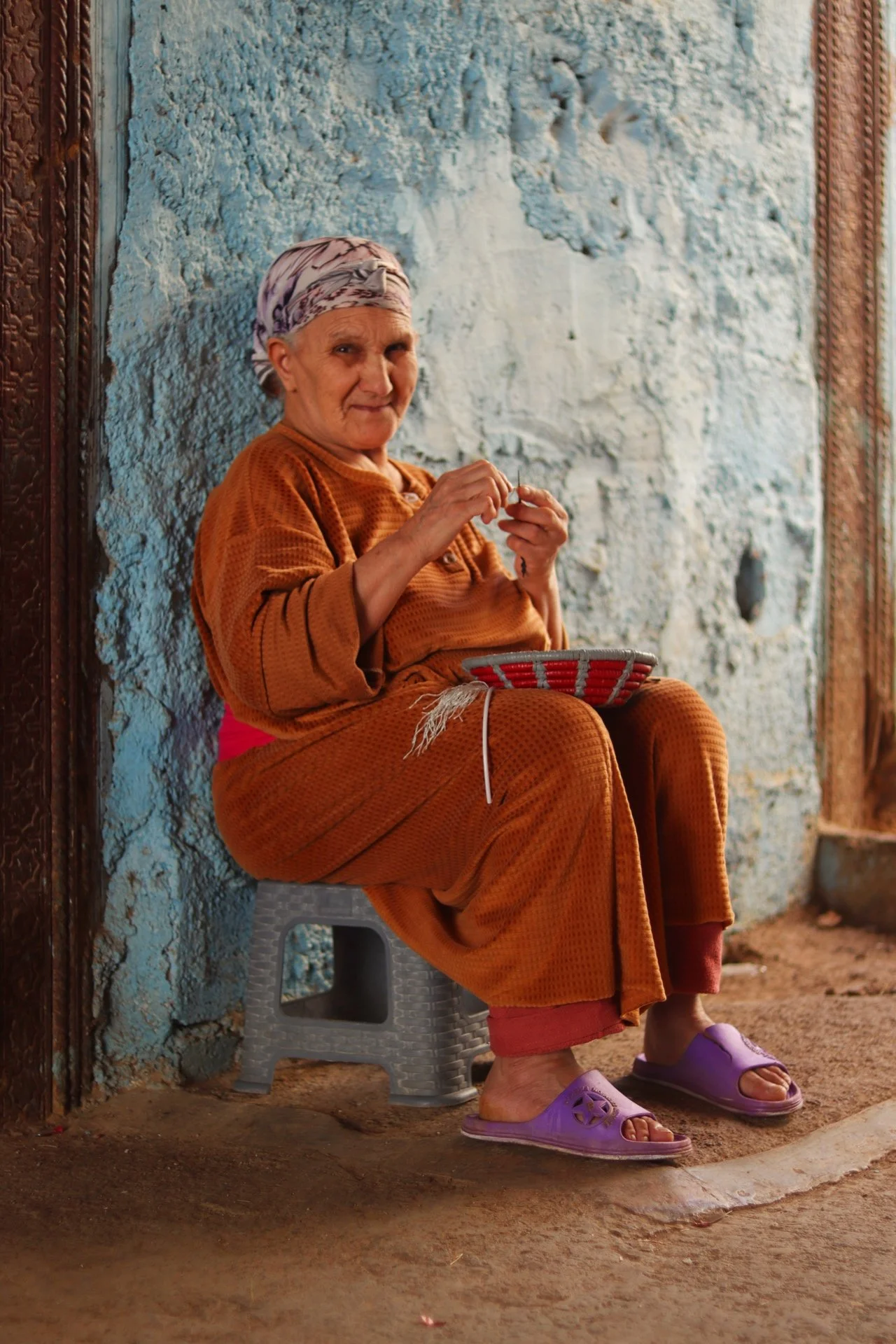
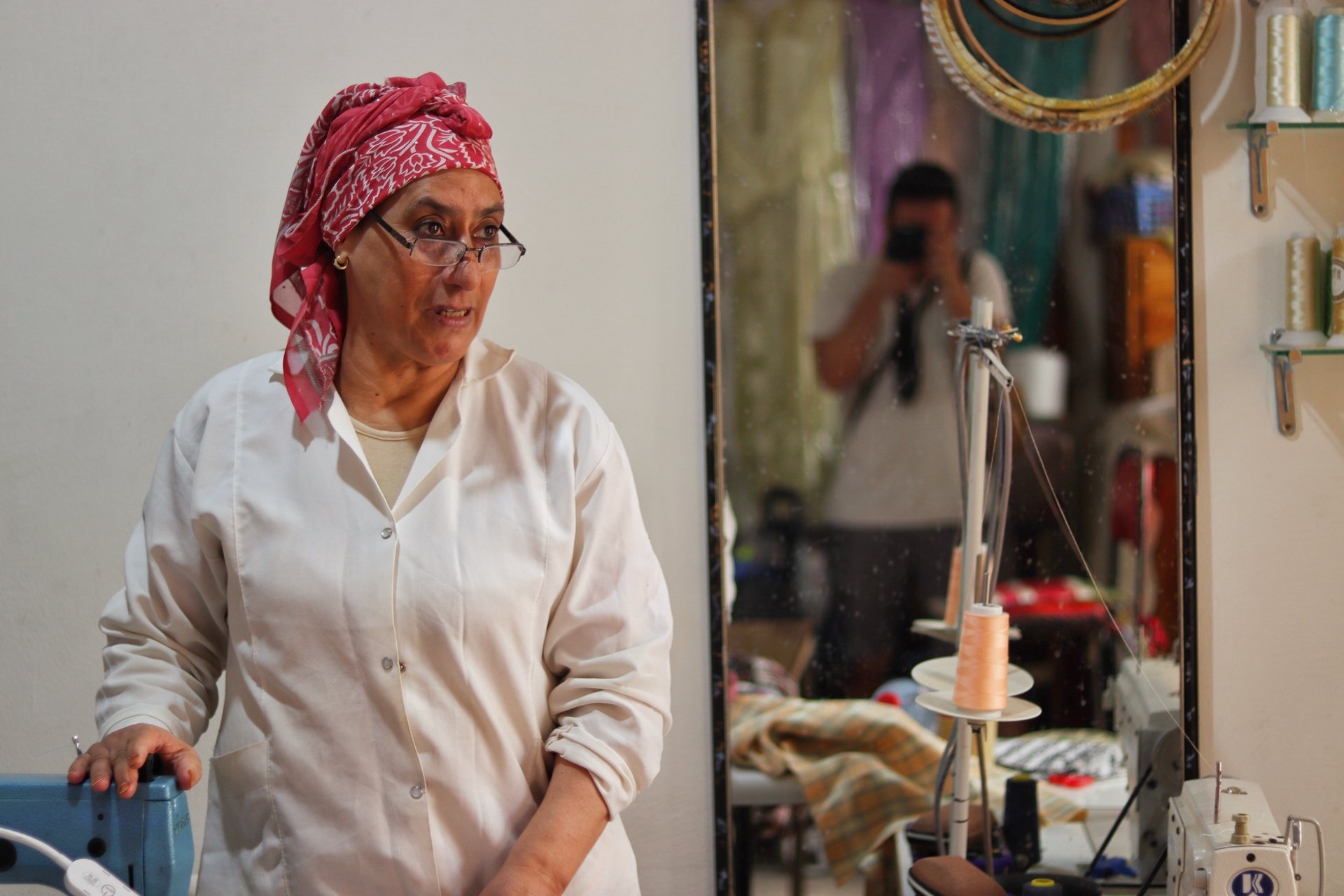
Before coming, I told Youssef I wanted to meet and photograph artisans—and once we started walking, the introductions kept rolling.
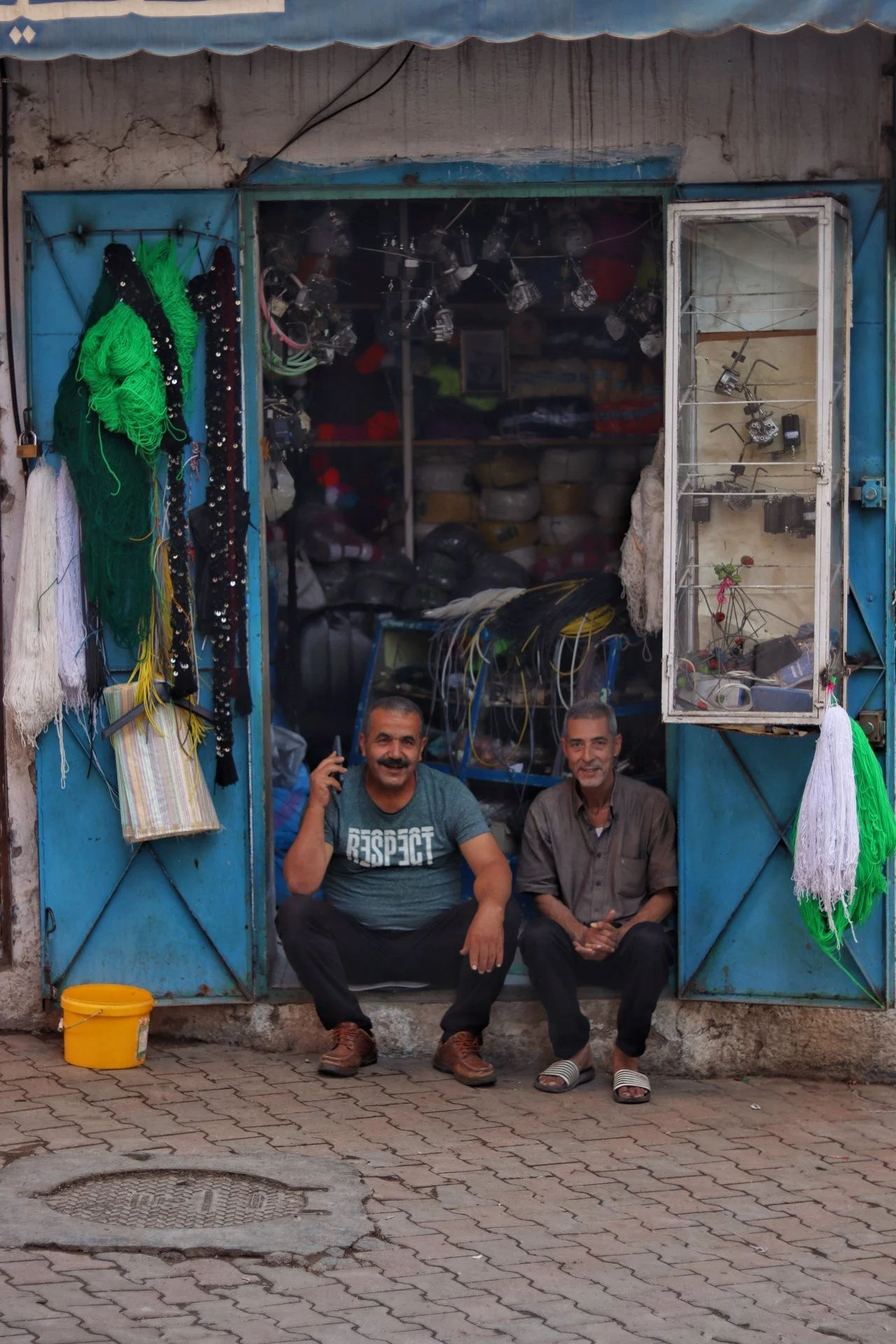
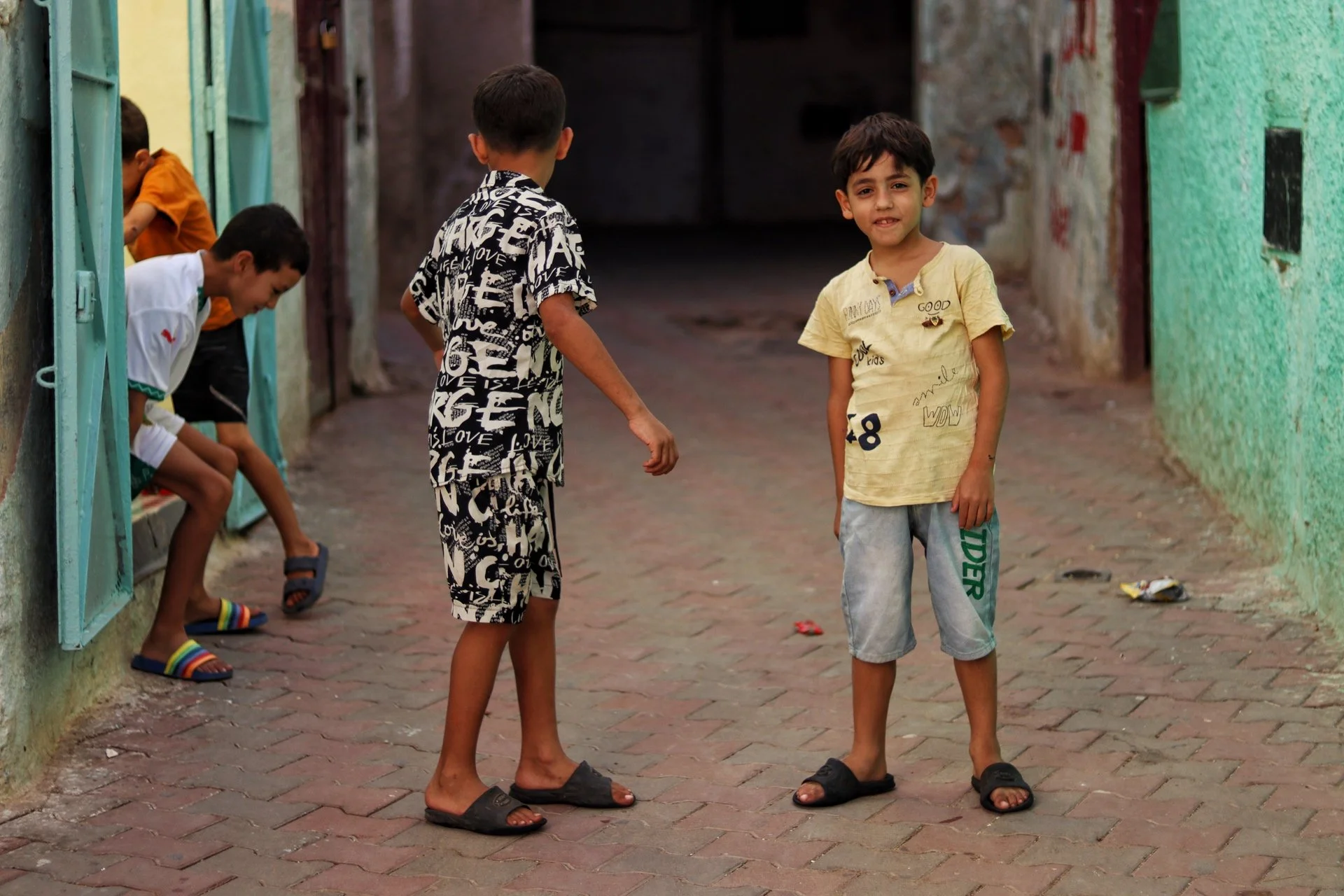
He took me through the market, then through artisan workshops. Every single person was open to being photographed, to engaging. There was no yelling out, no harassing. Every interaction felt warm, the Morocco I experienced when I first arrived in Tangier. In Fes, I was losing faith in the trip — in Sefrou, it was delightfully restored.
As we walked, one thing stood out: I’d often see three shops that sell the exact same thing placed right next to each other. For example, three consecutive textile shops selling the exact same qamis. This is the exact opposite of the US, where you must distinguish from your competition or outshine them in some way. I asked Youssef, if all these shops look and sell the same thing, do they worry about competition?
“If you have the right intention, the right feeling, then the Lord’s benediction will help you,” he told me. “You can have the best marketing, the best salesmen, the best location—or you can be all the way up in the mountains. But without benediction, you’re screwed.”
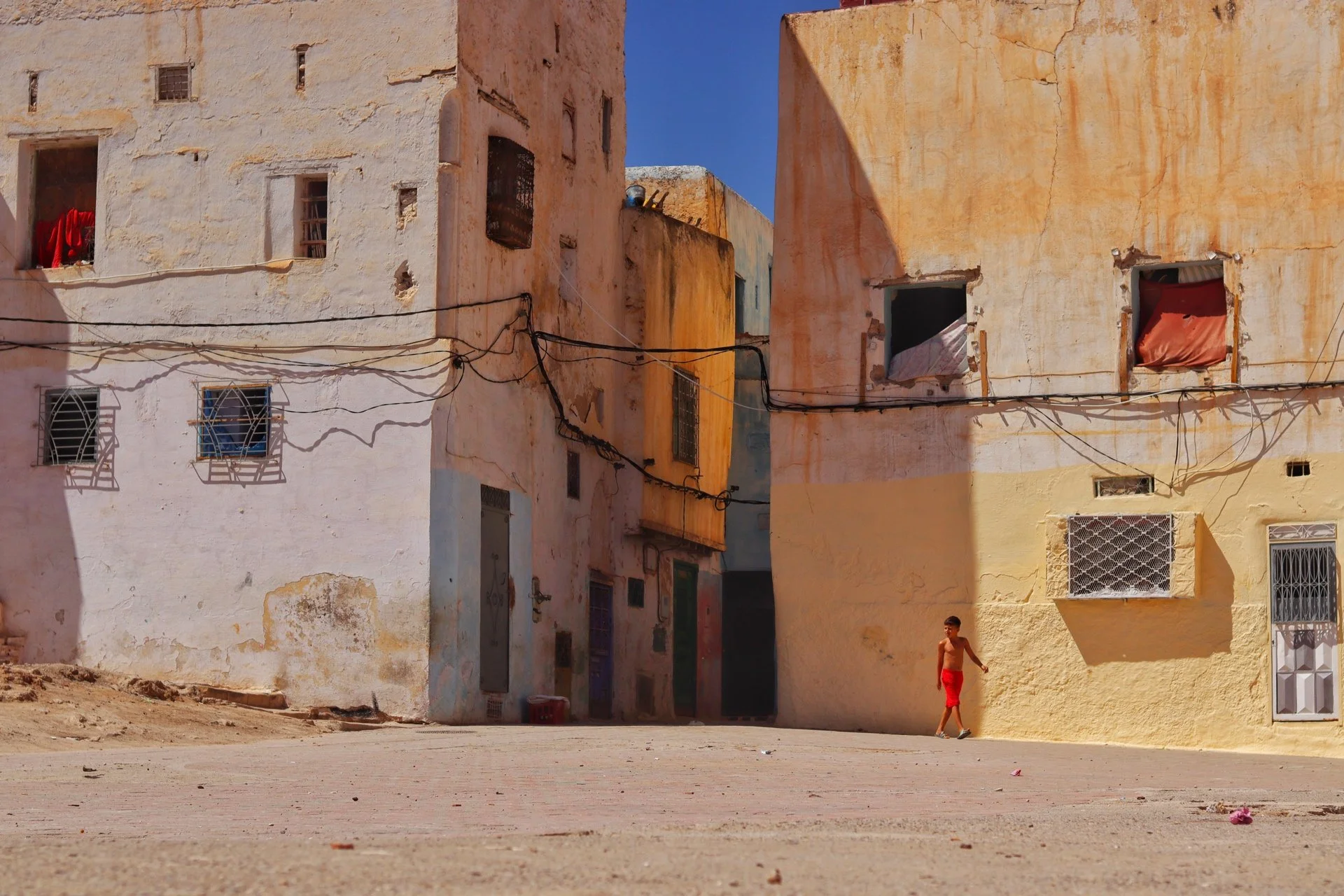
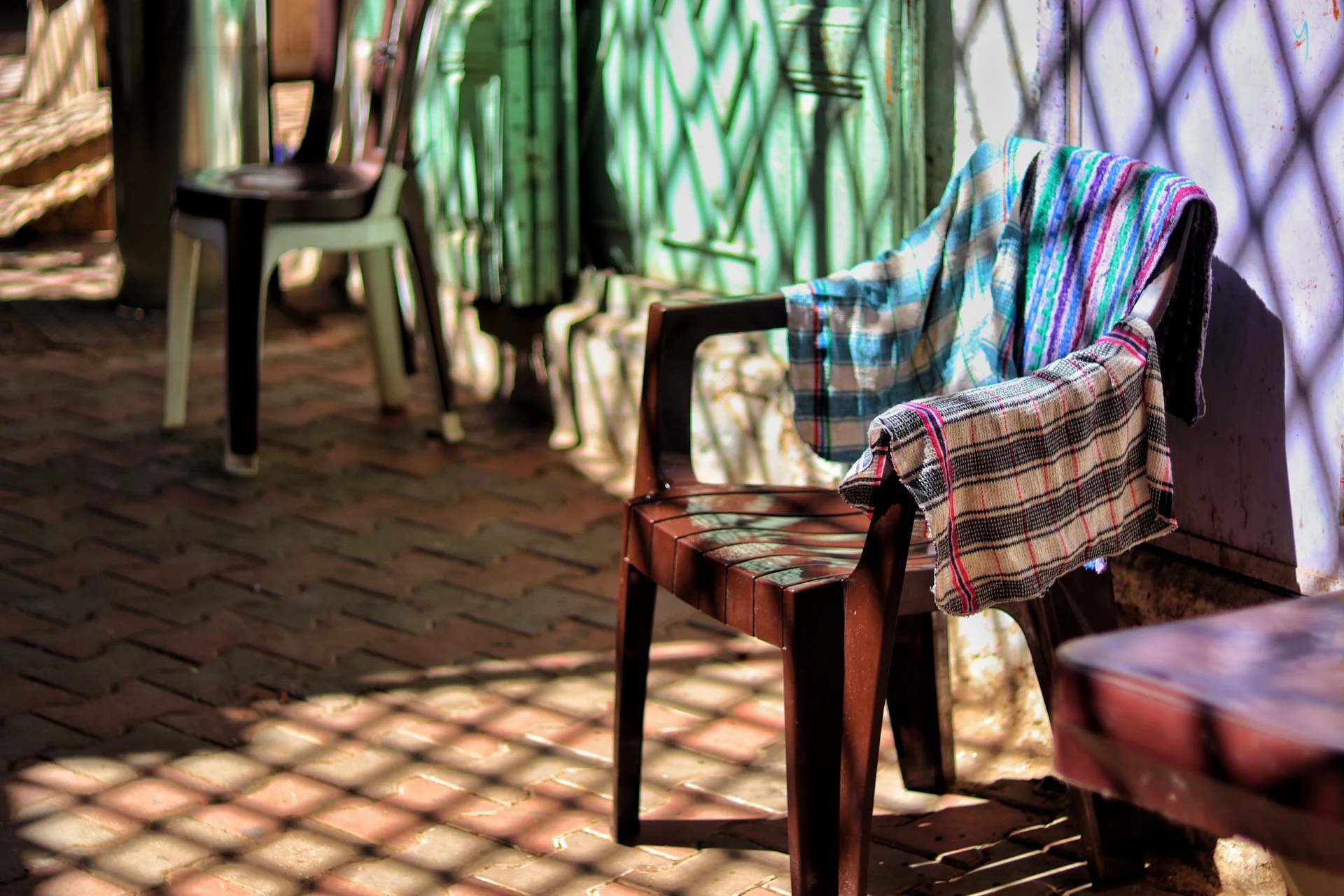
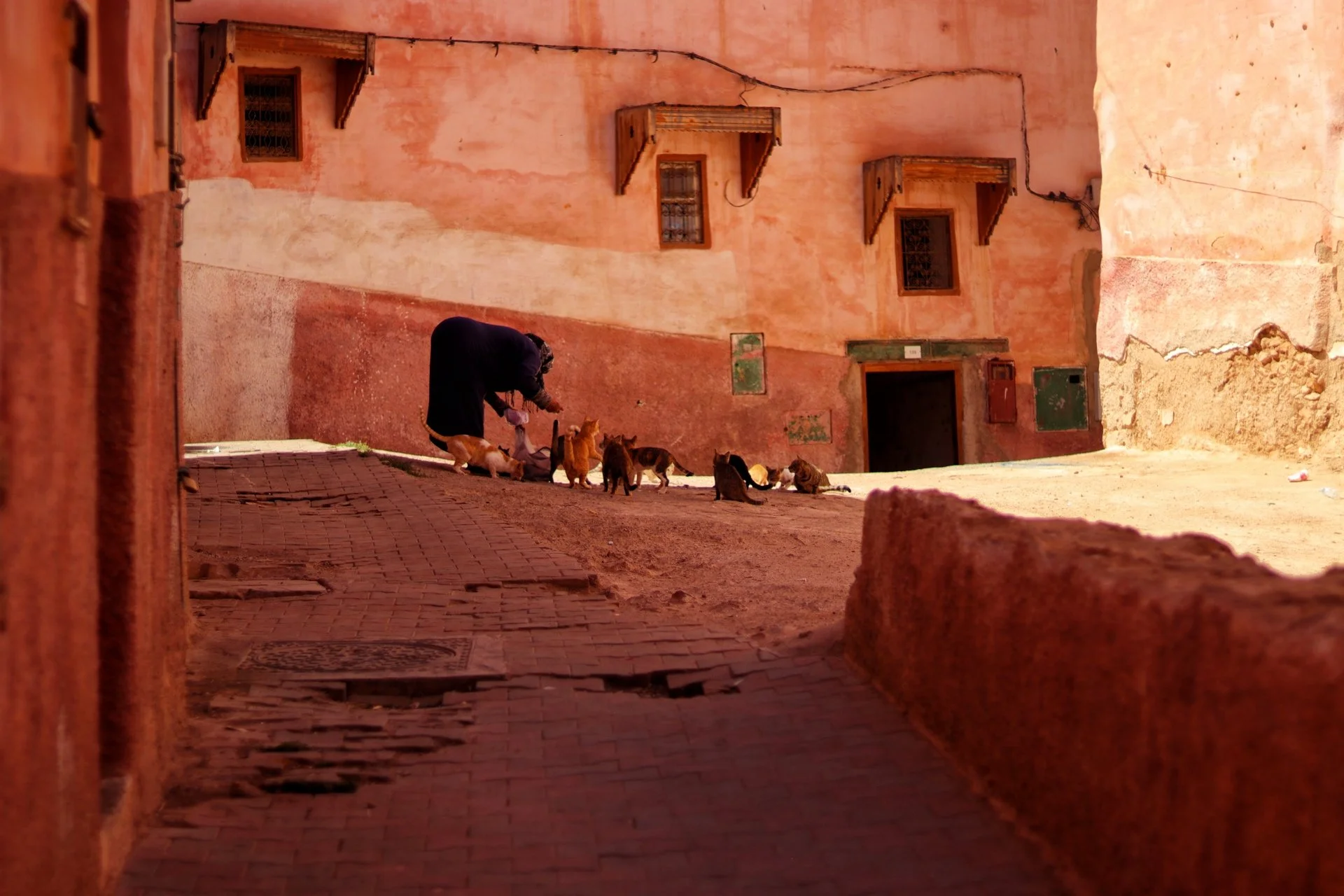
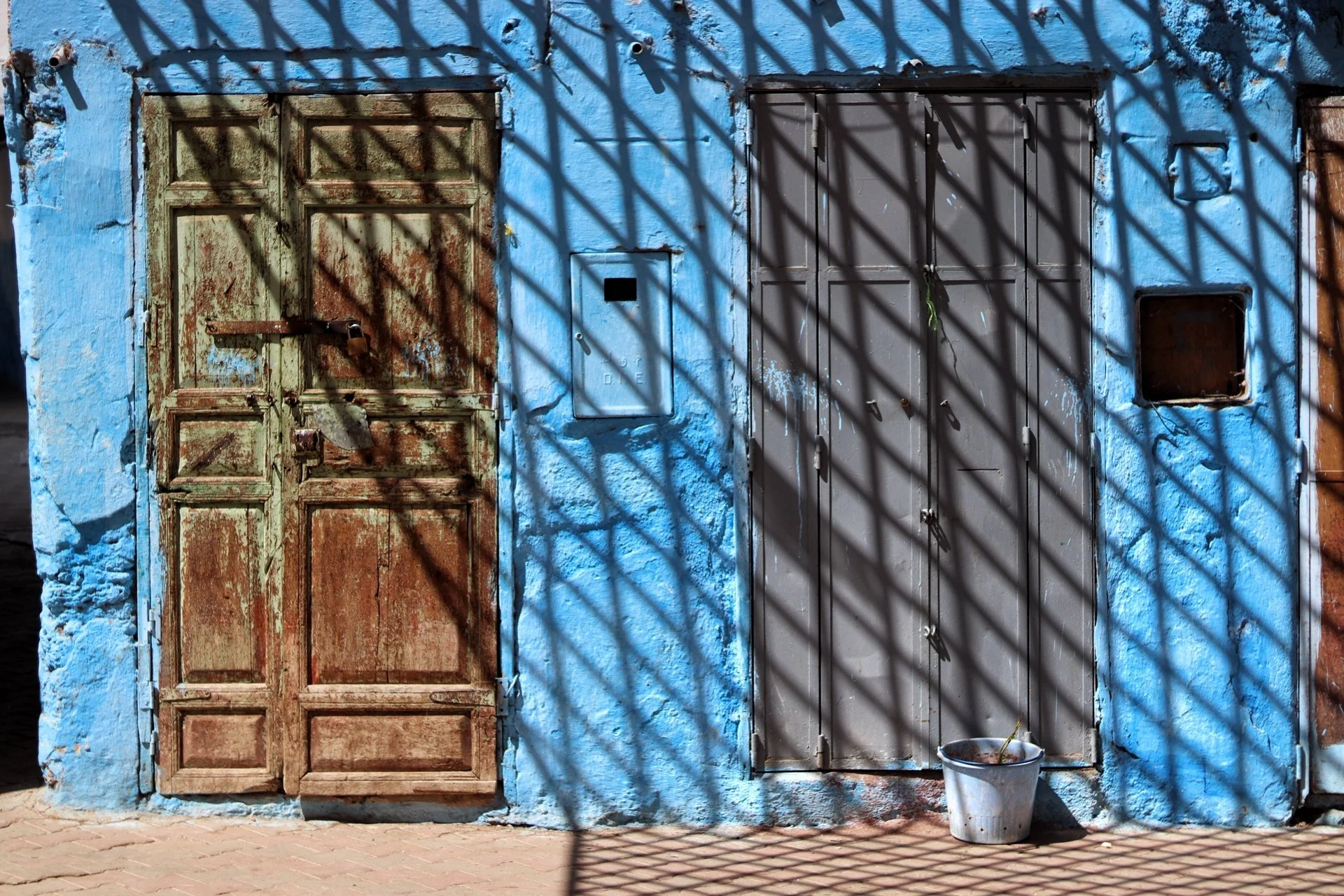
Survival Tips from Youssef
Get taxis from taxi stands. Those ones have to use a meter. Otherwise, you can call the police, or threaten to. Fares across the city should never cost more than $2. If you wave a random one down, you’re on your own.
Wash fruit and veggies with vinegar and water. People respond differently gut-wise to the food here. I am a non-stop waterfall, unfortunately. It’s ever-so-tempting to pass carts and trucks with stacks of luscious purple figs. Don’t even try it, though.
My rule of thumb with scams. If they approach you, don’t trust them; if you approach someone, and they help you, they tended to be legitimate.
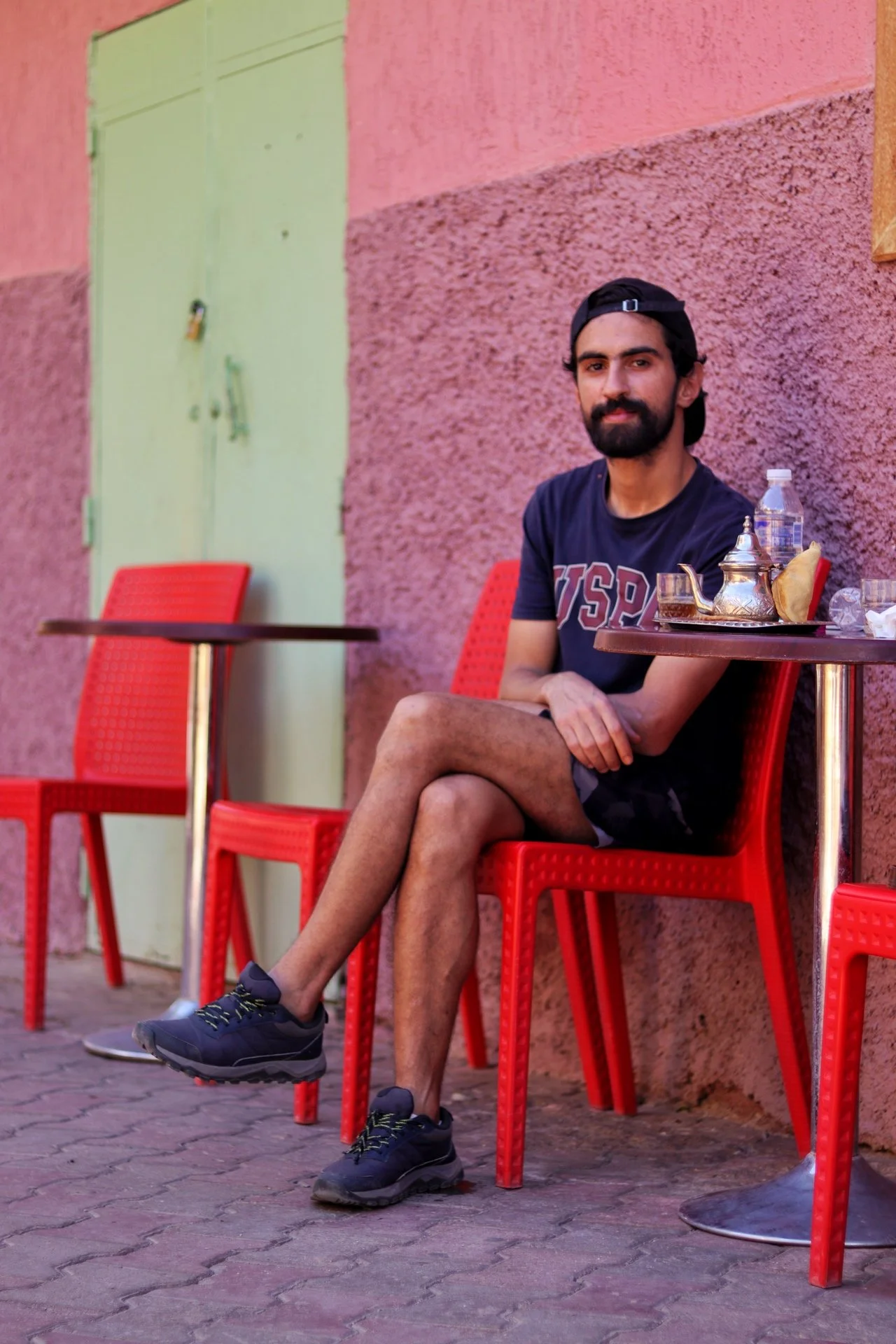
Youssef, my savior in Sefrou. I’m quite upset he’s out of focus.
Fes, friends, was a disaster. I couldn’t wait to leave. So much so that when I learned my final night would be replaced by an overnight bus, I was overjoyed. I couldn’t wait to tell my guesthouse host. He could keep the change.
I felt deeply dehumanized. It was, dare I’d say, a waste of five days, including the night of eating an actually good meal — chicken patella — then running home for more explosive diarrhea. Part of my frustration included my hammam visit, the traditional Moroccan bathhouse; I paid 50x more than the typical price (fine), where a man reached his hands entirely too high up my legs during the massage portion several times (not fine). As I was leaving, feeling flushed, embarrassed and violated, he asked for a tip.
Other travelers felt similar about Fes, too. Aside from it being unbearably hot, the locals were remarkably pushy, to the point where I had to be downright rude with them. For the spiritual home of Morocco, I just expected it to be a little more…spiritual. It’s a happening place, yes, action everywhere, donkeys and fruit and odors and spices, but none of it nourishing. I found it depleting in every way, as all tourist traps are: financially, physically, emotionally, and spiritually.
Now I’m heading to the desert. I’m two weeks into my journey here and I am becoming cynical, tired, resentful. I know there is something that I’m missing, something that will make me more compassionate to the people and towards myself as a traveler.
What is it? What can make me less resentful?
****
MERZOUGA
“So, what do you want to do today?”
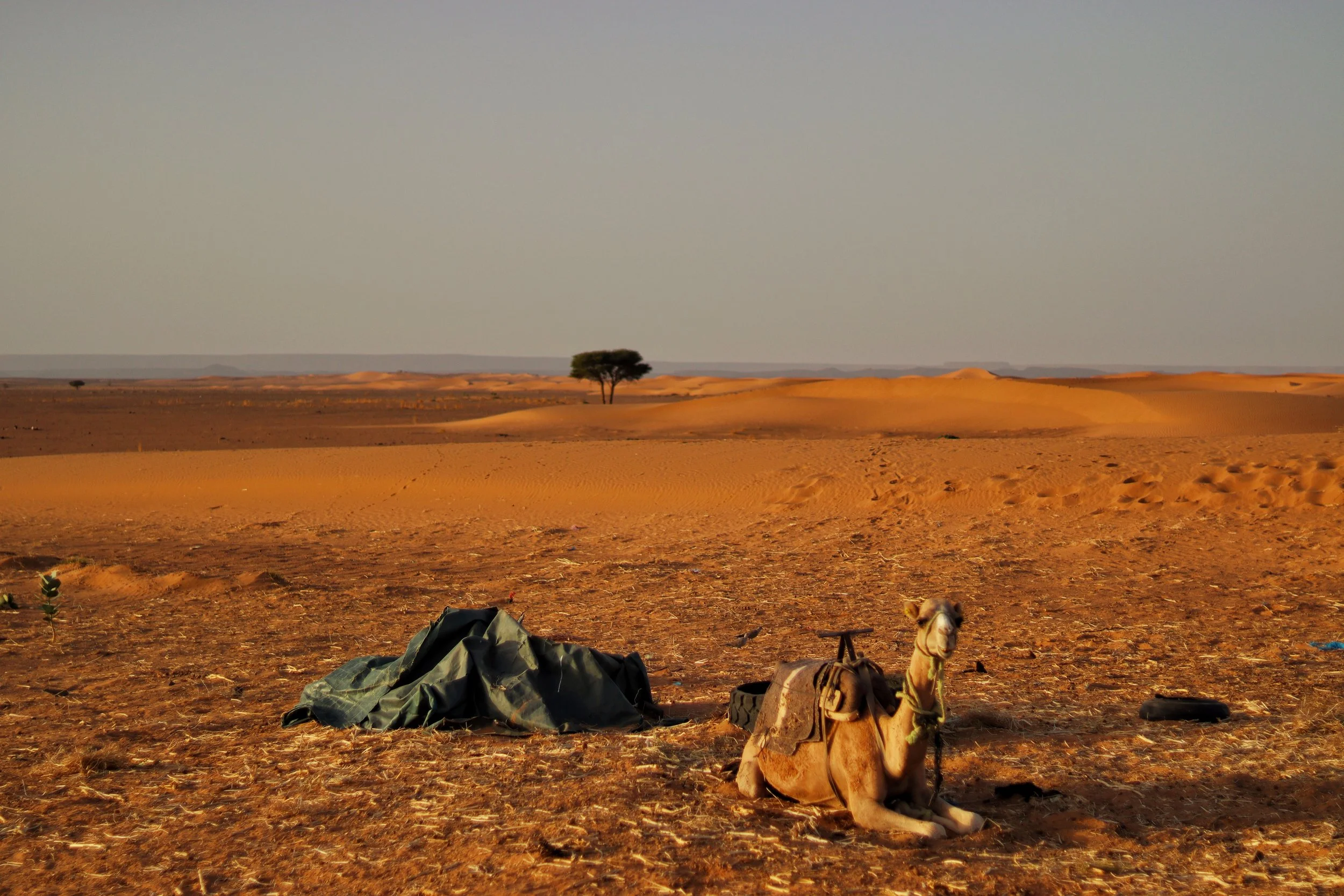
This is my host, Nabil. I’m at a hotel in the middle of the desert. That’s how they work around here. The Sahara desert is vast, and yet it’s crawling with vans, camels, hotels, and swimming pools.
It’s 9am. I took an overnight bus and I am beginning to truly resent them. The seats recline about three inches. The man behind me was so large, as soon as I put mine back, he started slapping the back of mine to ease up (meanwhile, the chair in front of me was right in my face).
Moroccan buses, I am experiencing, do not have bathrooms; that means for a frequent urinator like myself, I cannot drink water. They offer outlets on the back of seats, but none of them work. They mention free WiFi on the bus websites, but that never works either. You typically stop once for food, but the options haven’t been enticing for me, given the state of my stomach.
So you are on a bus journey dehydrated, tired, largely unfed (for food causes thirst), phone on Airplane mode, just staring out the window. Thank God for sports podcasts.
Miraculously I did sleep on the ride, albeit a few interrupted and choppy hours. I arrived at 6am, right at the sunrise. Nabil picked me up and graciously led me into a vacant hotel room so I could sleep a few hours. And now, he is asking me what I want to do.
“Uh,” I said, looking out into the desert, “what are my options?”
“You can do this tour,” he said. He then started listing all these stops and villages and whatnot, a little too quickly for me to keep up, “or you can do an ATV tour tomorrow.”
“Cool. How much?” I asked.
“2,500 dirhams,” he said flatly.
That’s $250, for two days of activities. That’s expensive, even for back home. I got him to $200, laboriously, and we agreed. As he described the day, it did sound exciting. Something in me though felt like I’d been had.
I set off for my tour feeling a bit empty. Help me God, because I’m becoming more cynical by the day. This is a culture that, by their stated values, centers around generosity, kindness, and hospitality. Maybe I’m under slept, maybe I’m jaded, but it has felt more hostile than hospitable.
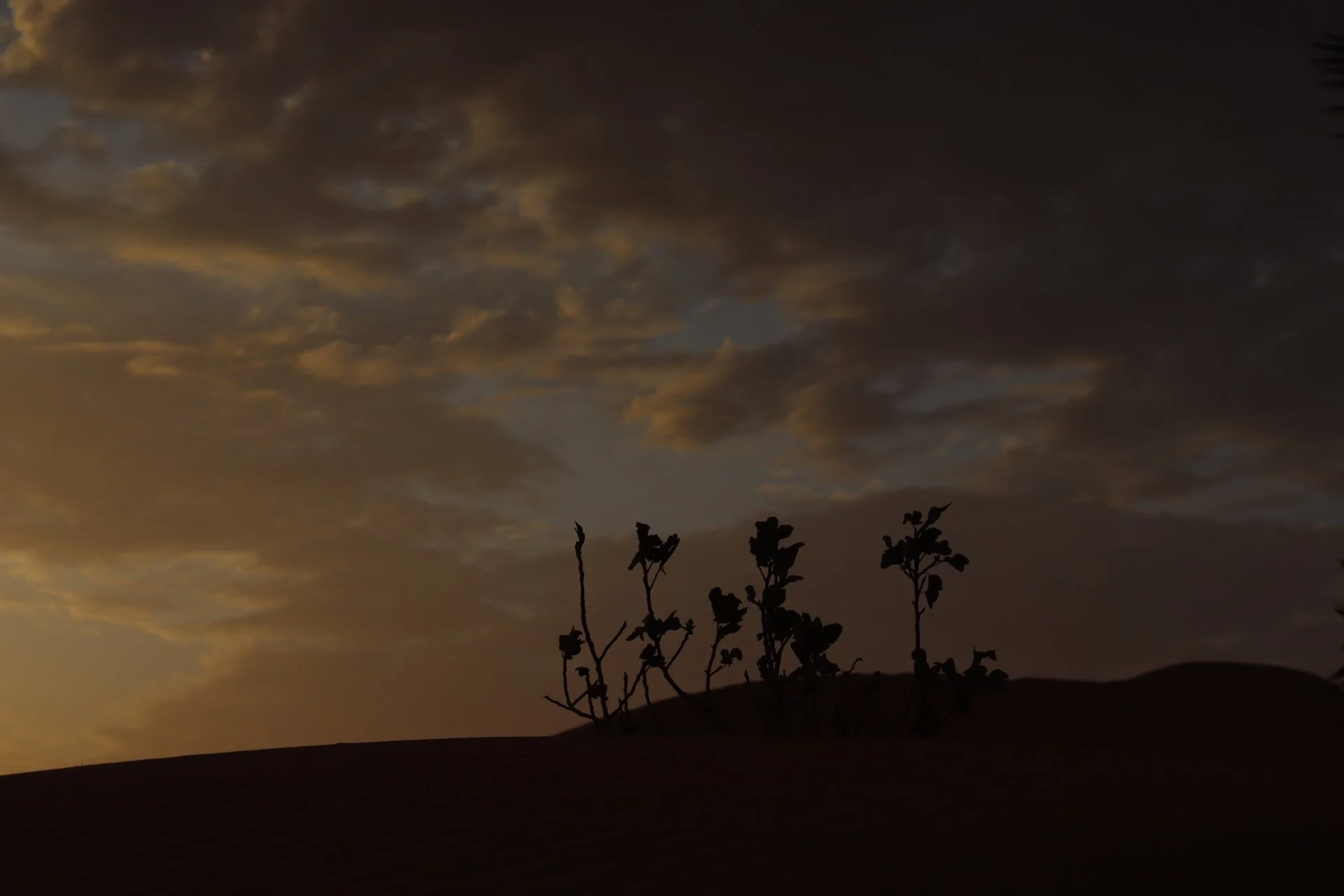
For my tour, I got into the car with Hamza, a young, good-looking Moroccan man who works at the hotel. He was wearing a bright blue qamis and white turban. He spoke near-perfect English and had an ease to him. He was warm and genuine. And funny. I quickly forgot about the feeling after haggling with Nabil.
We had a fantastic day. He took me to his village (“You can get a wife and a house, today!” he joked), through the desert, stopped at a nomadic village, then at a Gnawa music center, then back to the hotel. We spent the entire day together. He told me about his family, his childhood, his love of the desert. I told him about my trip, my writing, my life back in New York. He even gave me a nickname, Ali Baba.
At dinner that night, he was cracking jokes with me. After dinner he was playing in this drum circle. There was a group of 16 tourists, and then me. I was sitting by myself around the fire — it was dark — and he called out if I was there. I said yes. “Come play with us, Ali Baba,” he said. I sheepishly walked up, and he and the other guys taught me how to properly drum. We laughed as they patiently explained the technique, then teased me for how bad I was.
The next day, I shuffled up to breakfast and Nabil told me I’d be going with Hamza again. He listed all these stops we’d hit. So much for the ATV tour, I thought. And off we went again.
This morning was a bit different. Hamza was in the back seat, and we had a driver, whose name I never got. He was Moroccan too and a bit older.
We begin and things feel grand. The coffee’s kicking. I’m sitting shotgun as we’re flying through the desert in this Jeep. I’m scribbling thoughts, notes, and stories in my journal. I’m inspired. I’m happy.
“Nothing is what it seems.” This phrase keeps popping in my head as we drive. Fitting as I have this thought in the desert, the land of mirage. But that line has been the theme of this trip: Just when I feel I’m “getting the hang of it” here, everything then shifts, like the moving staircases in Hogwarts. Literally speaking, I thought of this Dutch guy I met in Fes — he was cycling across Morocco, and he always had to re-route as roads marked on maps would disappear; either they were washed out by rain or mysteriously closed or simply not there.
This feeling was made way worse by ongoing diarrhea and dehydration. Ever since I arrived, I’ve been operating in a state of disorientation.
The tour today, however, isn’t so great. We went through these old villages, stopped outside a school, then drove up to a viewpoint. It sounds nice, but there wasn’t much to see — rather, it felt like they ran out of places to take me. It was getting hot and I was getting hungry. Hamza asked if I’d rather eat “Berber pizza” in the village or go back to the hotel. Pizza of course, I said.
As we headed into the village, we first stopped at this market in a very small town. Aesthetically speaking, this is the Morocco I’d read about: chickens running about, shafts of sunlight streaking through the corrugated roof of the market, hand-pulled carts, piles of spices of blue, orange, brown, saffron, maroon.
Hamza was leading. We approached an herb shop, almost like a pharmacy. Hamza brought me in, then disappeared. There was a crowd of white tourists inside, getting a spiel. The owner approaches me. He speaks perfect English and starts showing me all these herbs and spices: mint, saffron, garlic, herb-infused coffee. He isn’t looking at me, but past me, through me. It’s almost eerie. Everything sounds scripted. I bought some infused coffee and we moved on.
Then Hamza brought me to a clothing store, and asked if I wanted to buy a qamis. They slipped one on me, then tied a turban. I was going along with it, I was having a good time. They said the price — far higher than I’d anticipated —and I was almost tempted; sure, I’d never wear it, but I was having such a great time with Hamza these past few days, and it would’ve been nice to commemorate it. Then I pictured it sitting folded in my closet, forever untouched, and I said no.
Now it was time for lunch. When Hamza said we’d be eating in the village, I expected we’d be at a cafe or restaurant. Instead, we walked through these twisting narrow alleys and approached a very ornate facade, at a dead end. It looked like the entrance to a temple. A man outside greets us warmly and walks me and Hamza inside. The room is filled with hanging rugs.
“This is the restaurant?” I ask Hamza.
“Yes,” he told me. “You will eat downstairs.”
They walked me up to this guy who was grinning ear to ear. A bit too much of the whites of his eyes were showing. He has a very long, skinny face, a purple turban, and a small goatee, not too unlike Jafar from Aladdin. “I’m gonna go out and smoke,” Hamza told me. “I’ll meet you when it’s time to eat.”
The smiling man took me into a room filled top to bottom with tchotchkes. Then into another room filled with rugs. I tell him repeatedly that I’m not interested in buying anything, he didn’t seem to register. He then took me downstairs, sat me down, and started rolling out rugs for me. Rug after rug after rug.
Oh, I thought. I know what this is.
Before my trip I’d heard exactly of scams like this. I always assumed it happened to idiot tourists who said yes to some kid in Marrakech and were taken for a ride. Granted, you don’t have to buy anything, so it’s not truly a scam — but they make it almost impossible not to, despite how stubborn you are when you come in.
He’s rolling out more rugs for me. The way he speaks, so rehearsed and formal, reminds me of someone from a Werner Herzog documentary, a character from the fringes. I’m feeling off. It’s not the fear of spending money that’s got me, or any physical danger—it’s the feeling that I got duped.
Look, I know I’m a tourist. I know I paid a lot for these stupid tours. And I know the dynamic at play: I’m a foreigner from a wealthy western country, visiting a developing country with limited opportunities for making money. I get it.
But my brain didn’t, at least at the time. I was deeply lonely and starved for connection. I was so desperate for any type of local exposure. And on some level, it felt like Hamza was a buddy. He gave me a nickname. He opened up about his life, and asked about mine. He invited me to play the drums when I was sitting all alone. I know he was the hotel staff, but up until then, it felt like he was looking out for me, in some way.
I know this was foolish or naive to believe, for looking to a hotel staff as a friend. But it’s how I felt. And sitting there in this basement, with this wide-eyed Herzog guy talking in his weird scripted accent and his creepy bright blue slip-on shoes and rolling out rug after rug, I kept sinking lower and lower.
I didn’t feel duped, I realized. No, this was worse. I felt betrayed.
Hamza eventually came down, along with our driver and the “pizza.” It was greasy flatbread filled with onions and ground meat. We ate it silently, just the sound of lips smacking, the Herzog guy included.
After the meal, the guy rolled out even more rugs. The entire floor was covered in rugs, many overlapping one another. In fairness, he wasn’t pushy, just relentless, with many different angles after I said no. “Think of like you’re helping the community,” he told me.
The weird part was, as he was doing this, I looked over to Hamza almost helplessly, like, Can you ask him to stop? But Hamza didn’t look back. He kept looking down, avoiding eye contact.
Eventually, we left. I was seething. I kept replaying the scene on the ride back, how I’d ream out the woman who originally sold me this stupid desert package, and was debating whether or not I should say anything to Hamza.
It was about 4pm when we got back. I had nothing to do the rest of the day. I was laying in the hotel common area and texting on my phone (the desert tents are way, way too hot during the daytime). Then, one of the hotel staff approached me and said he was on the phone with Nabil. He asked if I wanted to ride an ATV for $50. Hearing this, after the whole rug scene, set me off.
“What?!” I said. “I already paid him $200 for these two tours, and I was told the ATV was included.” He told me Nabil can get it down to $35. It was now 4:30pm, what else would I do for the rest of the day? I was tempted, but I just couldn’t do it. “Tell Nabil no,” I said back.
I felt great about the decision, but horrible about everything else. I was at least proud for saying no out of integrity, and not doing it for fear of boredom. Otherwise, I thought, I only had 12 more hours until I was gone.
As I was thinking about this, feeling slightly relieved, Hamza came in.
“Hey, Ali Baba,” he said. “If you aren’t doing anything the rest of the day, want to come with me as I walk the camels? We will walk them for the other guests and go see the sunset.”
“Of course!” I said. I shot up. “When?”
“In about thirty minutes,” he said. “Meet me back here.”
“I’d love to,” I told him.
Then he asked if I wanted to buy a rug.
Just kidding.
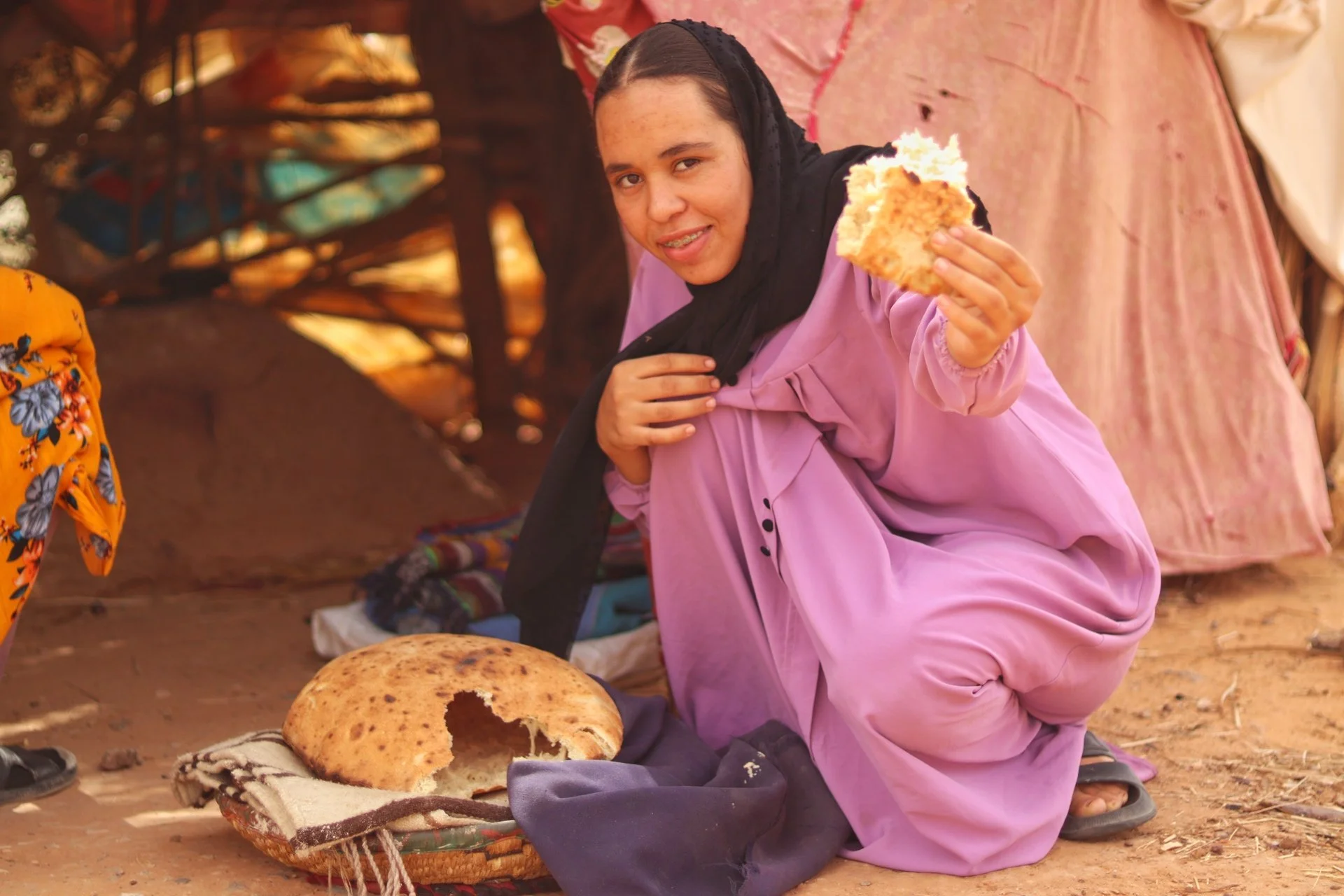
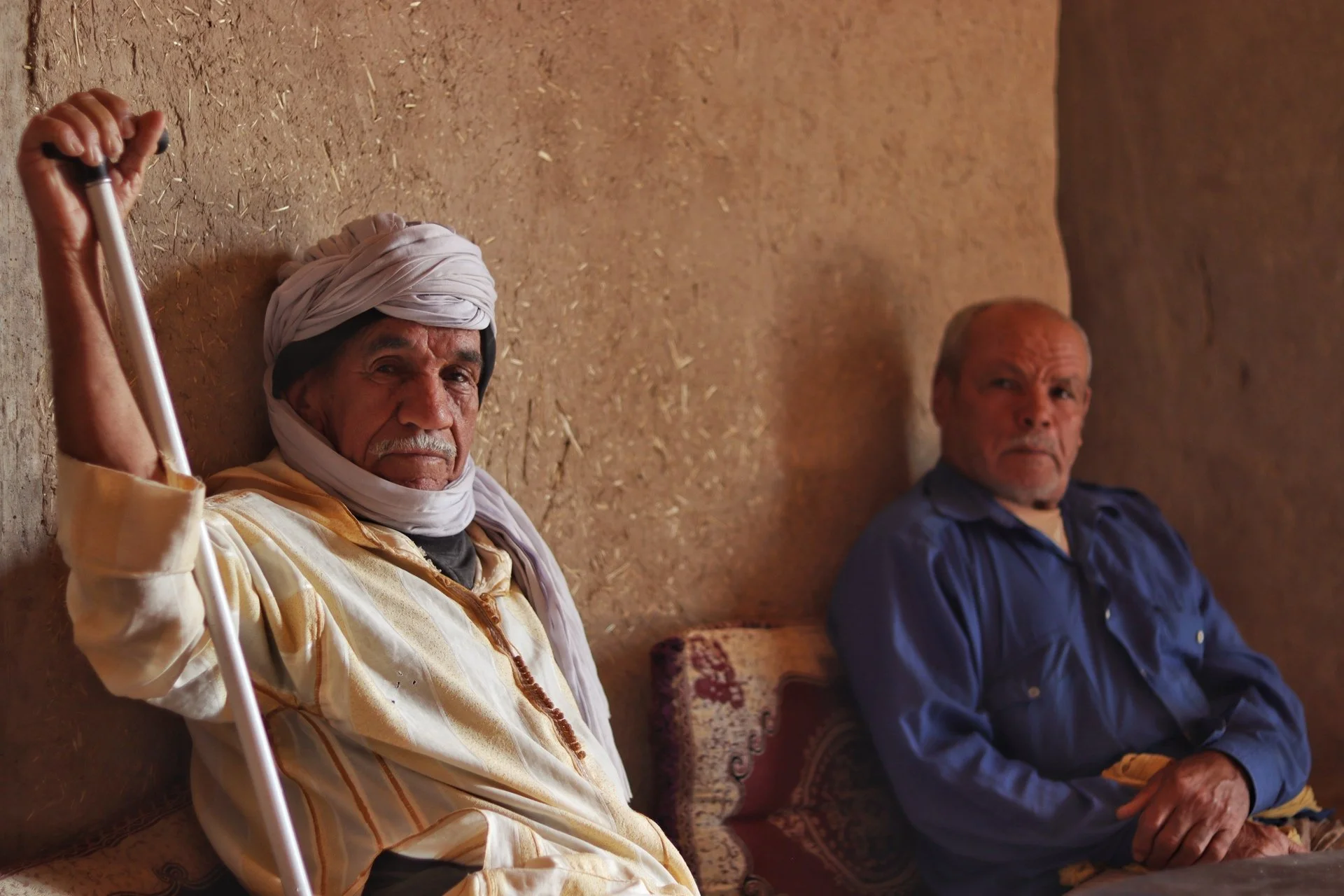
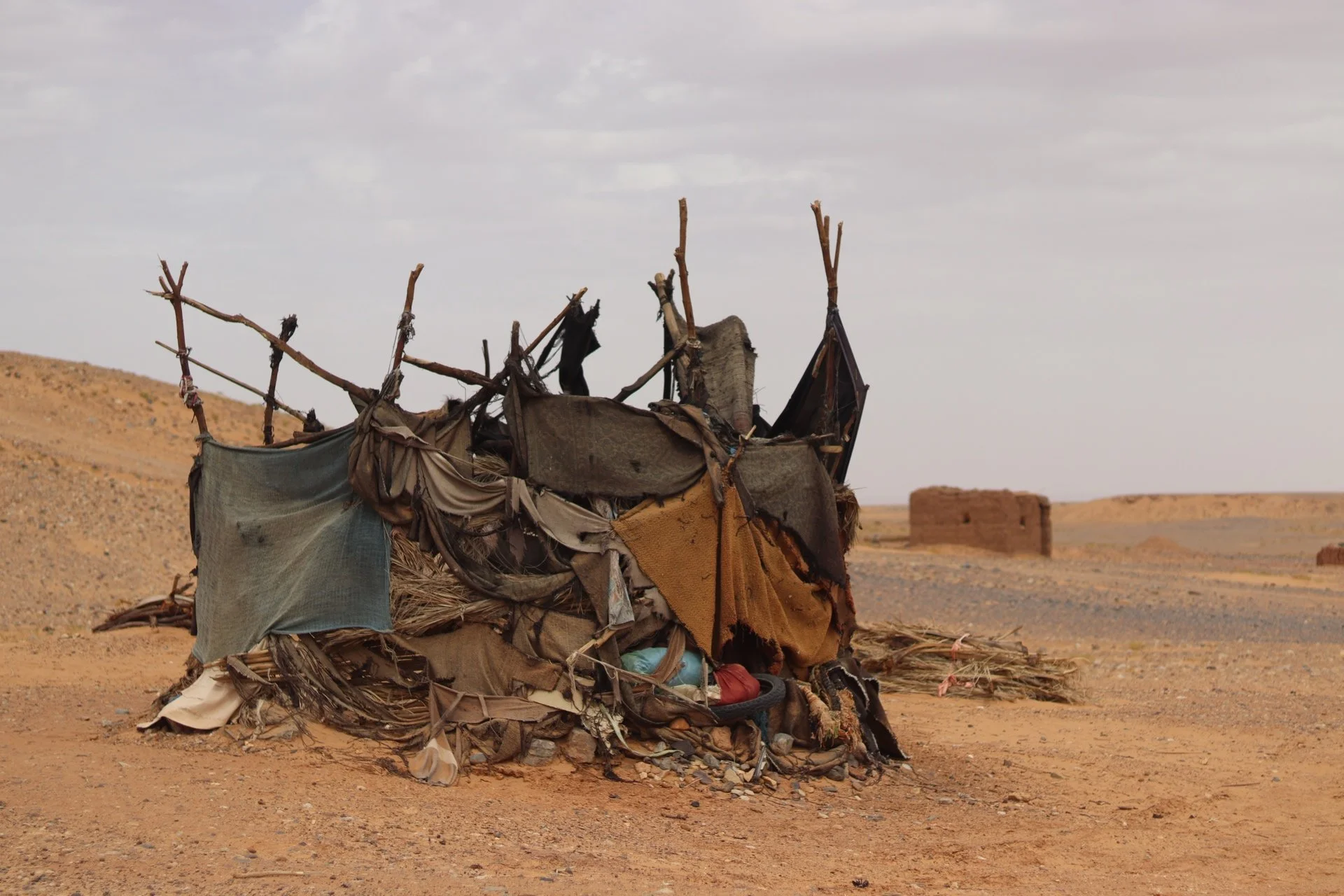
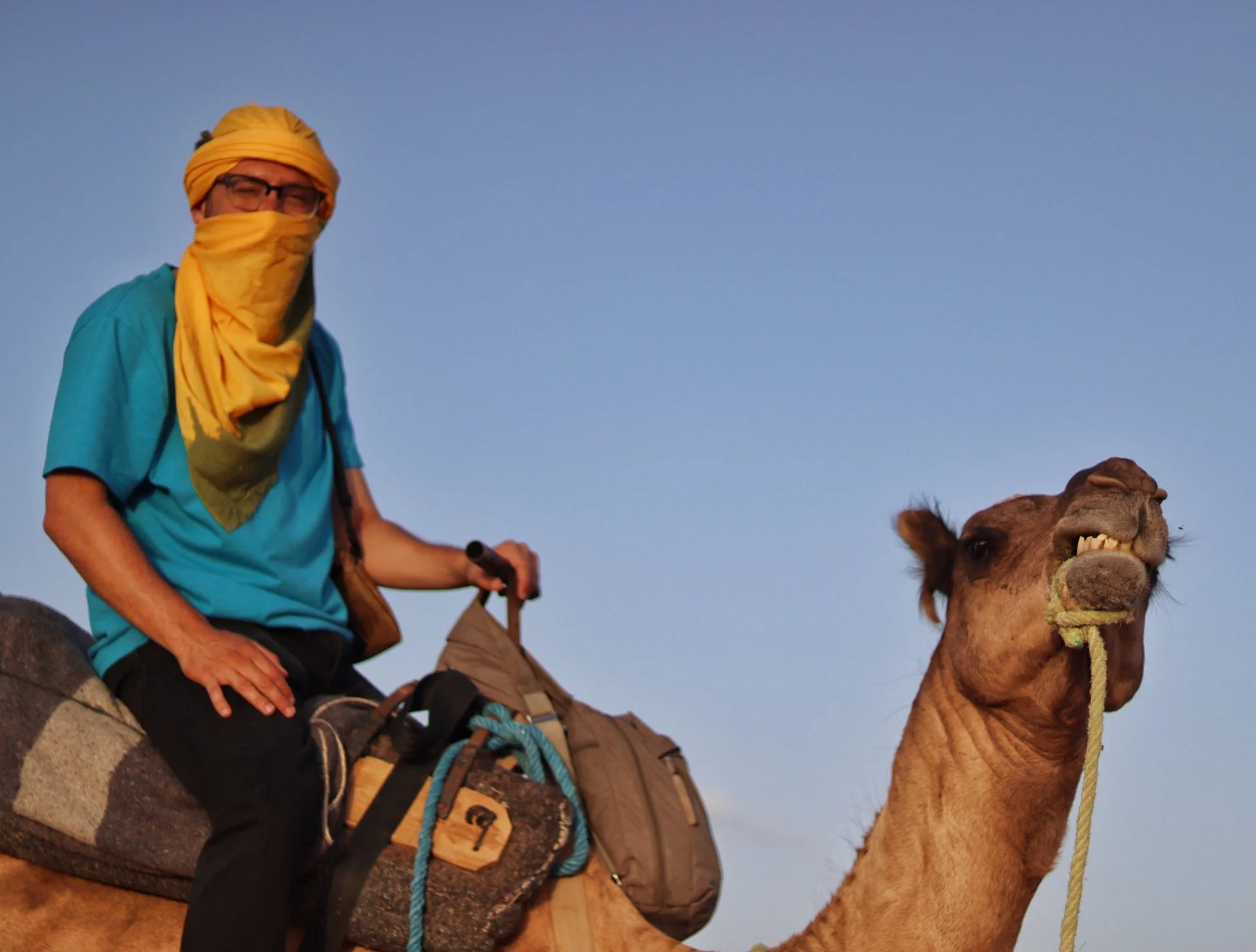
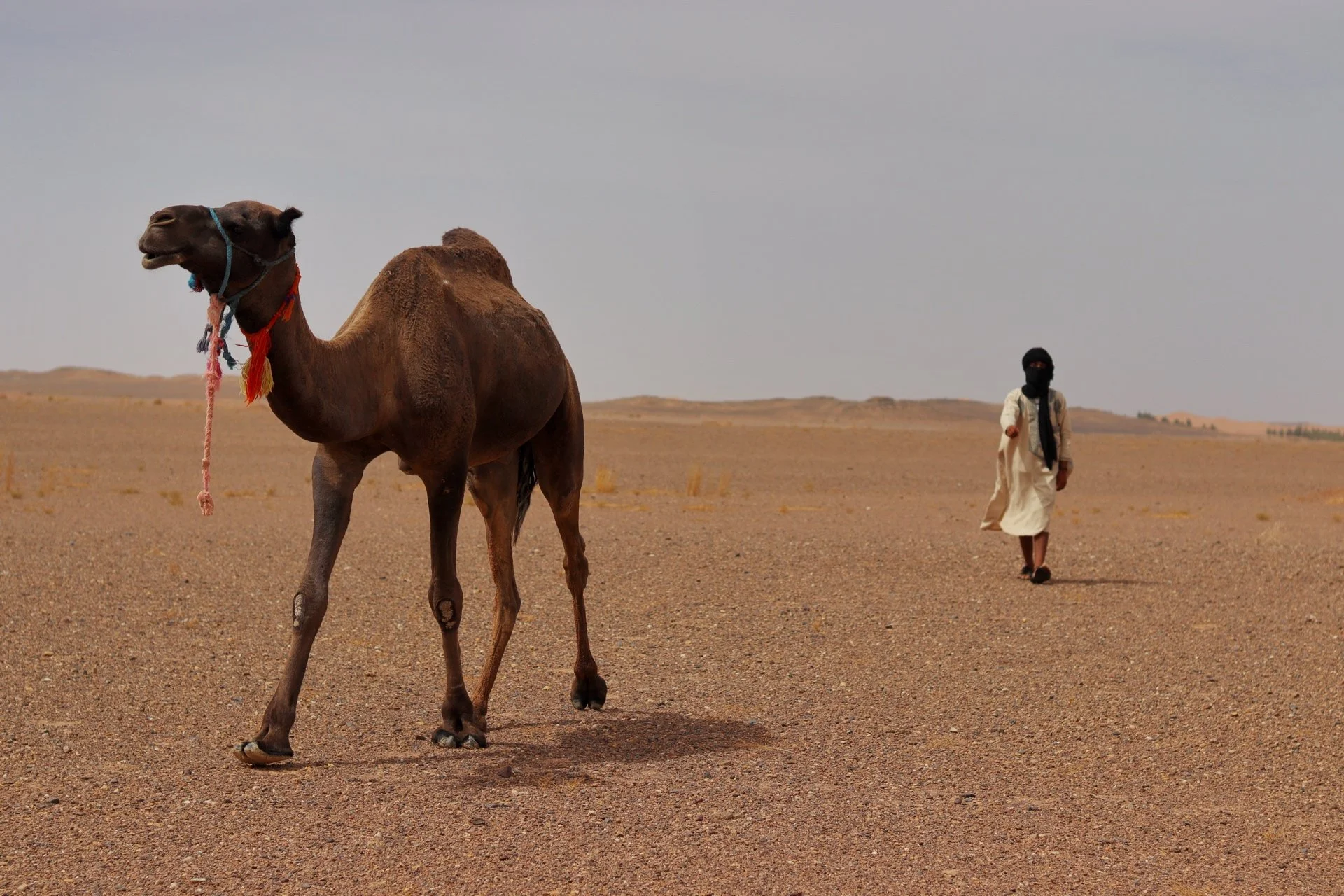
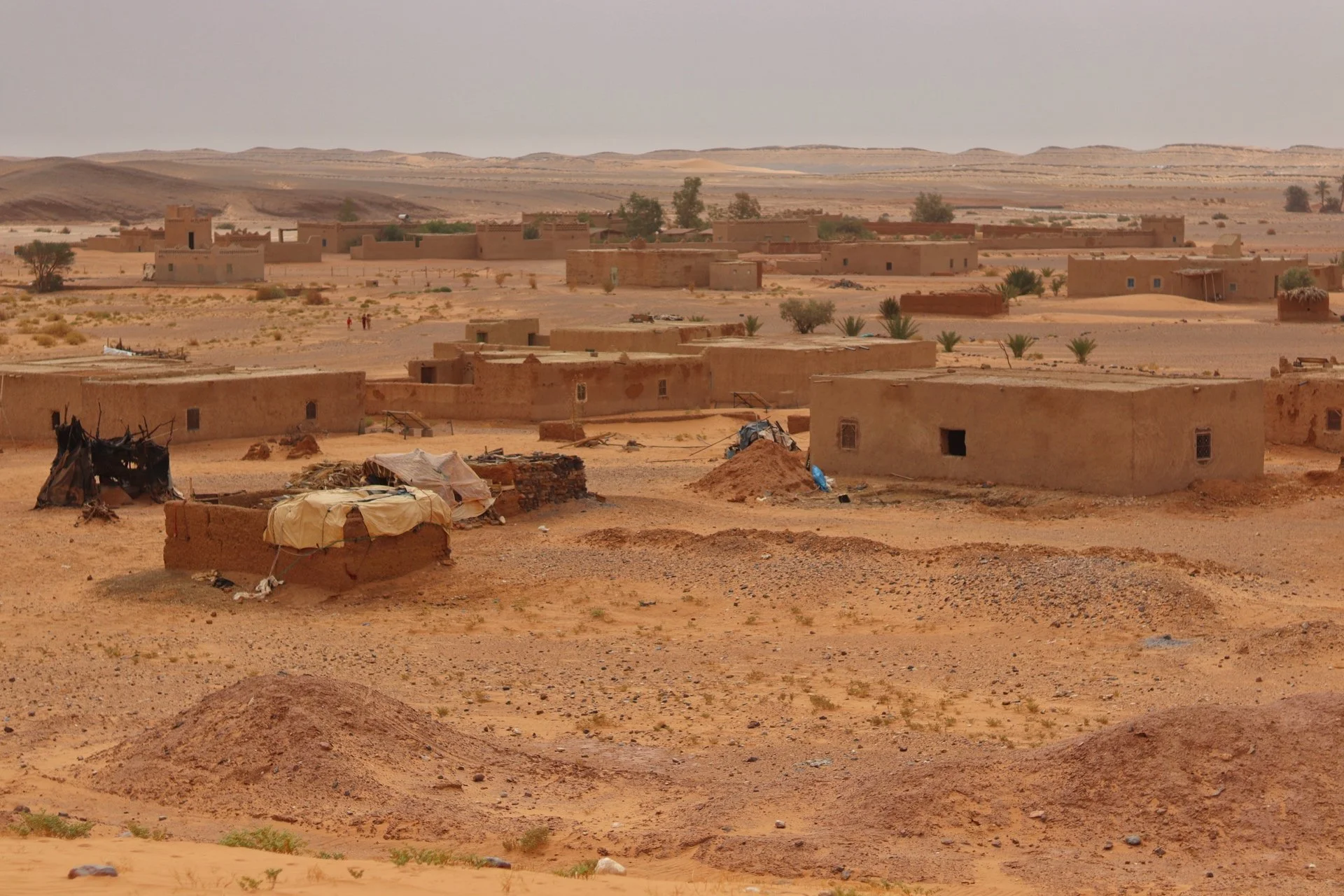
Overall, Merzouga was a mess and I was ready to go.
Each night I slept fitfully in the tent, which trapped heat and had no air flow (it was more like a yurt). I’d just lay in my boxers, no sheets, feeling sweat drip as I focused on my breathing and somehow fell sleep. Sure the serenity of the desert is magical — the golden dunes magnificent, the silence medicinal — but I could not wait to get out. I just felt I had no agency — no clue what to do or where to go. I felt if you moved a limb it cost 20 dirhams. If medinas were tourist traps, then I was now in the pit.
To make it worse, my second night at dinner, Nabil not-so-subtly, a-little-too-aggressively confronted me about the ATVs, to where I simply apologized and said I misunderstood just so the situation could diffuse (after all, this was the guy controlling what I ate for dinner). As I was leaving his hotel at 6am my last day, he charged me 200 dirhams for the waters I’d drank. One last kick in the gonads.
I was starting to really hit a low. Usually when you travel like this, you hit one bad city, one snag, but then things rebound. Things for me were just getting worse and worse.
I trust my intuition, and I felt it so strongly before this trip. Something deep had signalled that I come here to Morocco. But three weeks in, I can confidently say, I’m counting down the days until I leave.
My question remains the same: Why was I brought here?
The answer usually becomes abundantly clear. But for now, it’s yet to be seen.